


New Zealand bans tight nosebands during dressage
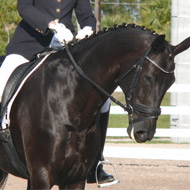
Under the new rules, “no noseband may ever be so tightly fixed that it will harm the horse"
The New Zealand Equestrian Federation (NZEF) has taken action to end the use of tight nosebands during dressage competitions.
According to Horse and Hound (H&H), the dressage arm of the ESNZ has agreed on a change to the rules which alters where on the horse’s face the noseband tightness is measured.
Under the new rules, “no noseband may ever be so tightly fixed that it will harm the horse. It must be possible to place one finger comfortably between the noseband and the nasal planum.”
Until now, noseband tightness was measured on the side of the face. Dressage New Zealand’s technical officer Scott McKenna told H&H:
“The Dressage New Zealand Committee were unanimous in its view that the previous rule, which required the noseband to be loose enough to fit one finger under the nose band on the side of the face, was not adequate to prevent nosebands being fixed so tightly that they may cause harm.
“This view was informed by the most recent scientific studies on the subject, plus the comments and advice of two veterinarians who were in attendance at the conference, including associate professor Chris Rogers from Massey University.
“Dressage New Zealand is investigating the use of a standardised measurement system to enforce this rule in a fair and consistent way and will also continue to monitor the situation to ensure the rule is effective.”
Welcoming the news, Blue Cross senior horse rehoming manager said: “Our charity believes it should never be common practice to use pain as a means of control, particularly as the principles of dressage are predicated on harmony and lightness.
“Classical training methods and good sense demand that if resistance persists, the trainer needs to address the root cause of this rather than tightening the tack and stepping up the pain caused. “
She continues: “Dressage New Zealand gets a ten from Blue Cross for following in the footsteps of the Danish and we hope many other competition bodies will join them to give a consistent message, and cause people to think twice about how we are training our horses.”


 Defra has published guidance for the vet sector ahead of a proposed UK-EU Sanitary and Phytosanitary agreement.



