


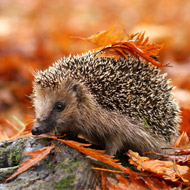
Researchers investigate the effects of key habitat types and badger sett density
A large proportion of rural England and Wales is ‘potentially unsuitable’ for hedgehogs and badgers to live in, according to new research.
The finding, revealed in the first systematic survey of rural hedgehog populations in England and Wales, suggests there is a wider landscape management issue affecting both species, rather than a single-factor being a cause of the hedgehog’s decline.
In the study, researchers investigated the effects of the availability of key habitat types and badger sett density on native hedgehogs. They found that while badger sett density is negatively linked to the presence of hedgehogs, there is evidence of both species co-existing and hedgehogs being positively associated with built habitat, like housing.
More concerning, however, was that badger setts were not recorded at many of the sites surveyed. Lead author Ben Williams, a PhD student from the University of Reading, explains:
"We found that although hedgehogs were generally widely distributed across England and Wales, they were actually found at a worryingly low number (21 per cent) of sites. We also found that hedgehogs were absent from 71 per cent per cent of sites that did not have badger setts either, indicating that both hedgehogs and badgers may be absent from large portions of rural England and Wales.
“We found hedgehogs at 55 sites. We also found that badger setts were present at 49 per cent of these sites, demonstrating that badgers and hedgehogs can, and do, coexist, as was the case historically for thousands of years prior to the recent decline in hedgehog numbers. However, perhaps, more importantly, our results indicate that a large proportion of rural England and Wales is potentially unsuitable for both hedgehogs and badgers to live in.
“Given the similarity in diets of the two species, one explanation for this could be the reduced availability of macro-invertebrate prey (such as earthworms) which both species need to feed on to survive. This could be as a result of agricultural intensification and climate change.”
The research was led by Nottingham Trent University and the University of Reading and funded by the People's Trust for Endangered Species and the Hedgehog Preservation Society. It surveys 261 rural sites covering all habitat types in England and Wales between 2014 and 2015 using footprint tracking tunnels.
'Reduced occupancy of hedgehogs in rural England and Wales: the influence of habitat and an asymmetric intra-guild predator’ is published in Scientific Reports.


 BVA has announced a new series of its Building Great Workplaces lunchtime webinars.



