
Your data on MRCVSonline
The nature of the services provided by Vision Media means that we might obtain certain information about you.
Please read our Data Protection and Privacy Policy for details.

In addition, (with your consent) some parts of our website may store a 'cookie' in your browser for the purposes of
functionality or performance monitoring.
Click here to manage your settings.
If you would like to forward this story on to a friend, simply fill in the form below and click send.

Your friend's email:
Your email:
Your name:
 
 
Send Cancel

Study uncovers Facebook trade in wild animals
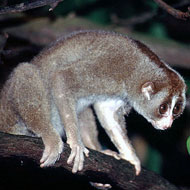
The most commonly listed animal was the Sundra slow loris, which was illegally traded as a pet and prop for tourists.

Over 1,500 animals listed for sale in Thailand 

A study by the wildlife group TRAFFIC has found more than 1,500 live animals listed for sale on Facebook in Thailand.

Researchers monitored a dozen Facebook groups for 30 minutes a day, over 23 days in 2016.

A follow-up study in 2018 revealed that 10 of these groups remained, of which one had become a secret group. Membership had nearly doubled, from 106,111 to 203,445.

Out of 200 species being sold, 47 per cent were not protected under Thailand’s primary wildlife legislation, in many cases because they were not native to the country. Most were mammals, birds and reptiles.

The most commonly listed animal was the sunda slow loris, which was illegally traded as a pet and prop for tourists. In total, researchers saw 139 listed for sale.

Other animals being sold included a critically endangered helmeted hornbill and 25 Siamese crocodiles.

In light of the research, TRAFFIC urged Thai authorities to close legal loopholes and bolster current enforcement efforts.

Image by Dick Culbert from Gibsons, B.C., Canada/CC BY 2.0/Wikimedia Commons

 

Become a member or log in to add this story to your CPD history

Equine Disease Surveillance report released for Q4 2025

News Story 1
 The latest Equine Disease Surveillance report has been released, with details on equine disease from Q4 of 2025.

The report, produced by Equine Infectious Disease Surveillance, includes advice on rule changes for equine influenza vaccination.

Statistics and maps detail recent outbreaks of equine herpes virus, equine influenza, equine strangles and equine grass sickness. A series of laboratory reports provides data on virology, bacteriology, parasitology and toxicosis.

This issue also features a case study of orthoflavivus-associated neurological disease in a horse in the UK. 

Click here for more...
News Shorts
NSA webinar explores sheep tailing and castration

The National Sheep Association (NSA) is to host a free webinar on the castration and tail docking of lambs.

The webinar, 'Understanding the tailing and castration consultation: A guide for sheep farmers', will be hosted online on Monday, 2 March 2026 at 7.30pm.

It comes during a government consultation into the methods used for these procedures. Farmers are encouraged to engage before the consultation period closes on Monday, 9 March 2026.

The webinar offers clear and actionable guidance to support farmers to contribute meaningfully to the consultation and prepare for potential changes.

On the panel will be former SVS president Kate Hovers, farmer and vet Ann Van Eetvelt and SRUC professor in Animal Health and Veterinary Sciences Cathy Dwyer. Each panel member will utilise their own specialism and expertise to evaluate risks and outcomes to sheep farming.

Find out more about the webinar on the NSA website.


