
Your data on MRCVSonline
The nature of the services provided by Vision Media means that we might obtain certain information about you.
Please read our Data Protection and Privacy Policy for details.

In addition, (with your consent) some parts of our website may store a 'cookie' in your browser for the purposes of
functionality or performance monitoring.
Click here to manage your settings.
If you would like to forward this story on to a friend, simply fill in the form below and click send.

Your friend's email:
Your email:
Your name:
 
 
Send Cancel

Amur leopard cubs caught on camera
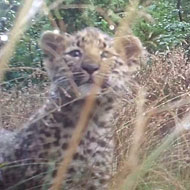
A pair of Amur leopards have been captured on camera for the first time since their birth. The Royal Zoological Society of Scotland announced the birth in July, but with human presence being kept to a minimum, it was not known how many cubs had been born.

Motion sensitive cameras have now revealed that two cubs emerged from the den - at least one of which may be released into the wild in Russia within the next two or three years. The Amur leopard habitat is not open to the public, to help ensure the cubs retain their wild instincts and behaviour.

Image © RZSS

Become a member or log in to add this story to your CPD history

Voting opens for BEVA Council

News Story 1
 Eligible members of BEVA will be able to vote for their Council team until Monday, 17 August 2026. Members will have received an election email on 17 July.


There are five candidates standing for four available places on Council. They are:

  • Alexandre Triguino
  • Angela Jones
  • Beth Bryant
  • Holly Rees
  • Hugh Somerville
Full profiles for each candidate can be found on the BEVA website

Click here for more...
News Shorts
BVA urges 'continued vigilance' over bluetongue

The British Veterinary Association (BVA) has urged vigilance following a concerning rise in Bluetongue (BTV) cases in sheep and cattle.

In a recent statement, the BVA noted that members are reporting more severe clinical signs and higher mortality rates than in previous years.

'We know that farm vets are working hard to support farmers and animals affected by this outbreak, during what is an extremely difficult time for all involved,' they stated. 'Continued vigilance to identify disease early is vital and vaccination remains the best way of protecting animals from this disease.'
