
Your data on MRCVSonline
The nature of the services provided by Vision Media means that we might obtain certain information about you.
Please read our Data Protection and Privacy Policy for details.

In addition, (with your consent) some parts of our website may store a 'cookie' in your browser for the purposes of
functionality or performance monitoring.
Click here to manage your settings.
If you would like to forward this story on to a friend, simply fill in the form below and click send.

Your friend's email:
Your email:
Your name:
 
 
Send Cancel

New Battersea Academy to support rescue centres
Training topics will include ethical decision making, the animal journey and introducing change.

Training programmes aim to boost standards 

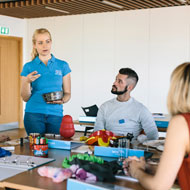
Battersea Dogs and Cats home has launched a new academy to support the professional development of rescue and rehoming centres.

Delivered by experts from the charity, the Battersea Academy’s educational programmes are designed to give participants knowledge and practical skills to run their centres to the highest possible standard.

It will be based at the charity’s centre in south London and aims to enable every rescue, whatever their size and resources, to do the best with what they have.

Training topics will include ethical decision making, the animal journey and introducing change. Training is tailored to the organisation’s needs and can last two to five days, including a mixture of classroom, workshop and practical hands-on training with Battersea animals.

Battersea’s deputy chief executive Peter Laurie, commented: “At Battersea, we strive to improve the lives of every dog and cat.

“For 158 years our charity has rescued and rehomed dogs and cats in need of our help across the UK. Now we’re using our unparalleled experience and expertise to help dogs and cats beyond our gates, using the knowledge we’ve gained over years of working on the frontline to help improve the lives of many more dogs and cats that we will never see.”

Several rescue and rehoming organisations have already taken part in the training, both in the UK and overseas.

Sofia Pavlin, committee member for for the non-profit organisation Udruga Snoopy in Croatia, added: “I feel the biggest impact from the programme for us has been seeing what can be achieved with the limited resources we have and understanding the small steps we can take that will eventually lead to achieving those results in the long term.

“It may take us some time to bring in all the improvements we would like, but just a few small changes here and there have really enhanced the quality of life for our dogs and volunteers.”

Image © Battersea

Become a member or log in to add this story to your CPD history

Equine Disease Surveillance report released for Q4 2025

News Story 1
 The latest Equine Disease Surveillance report has been released, with details on equine disease from Q4 of 2025.

The report, produced by Equine Infectious Disease Surveillance, includes advice on rule changes for equine influenza vaccination.

Statistics and maps detail recent outbreaks of equine herpes virus, equine influenza, equine strangles and equine grass sickness. A series of laboratory reports provides data on virology, bacteriology, parasitology and toxicosis.

This issue also features a case study of orthoflavivus-associated neurological disease in a horse in the UK. 

Click here for more...
News Shorts
NSA webinar explores sheep tailing and castration

The National Sheep Association (NSA) is to host a free webinar on the castration and tail docking of lambs.

The webinar, 'Understanding the tailing and castration consultation: A guide for sheep farmers', will be hosted online on Monday, 2 March 2026 at 7.30pm.

It comes during a government consultation into the methods used for these procedures. Farmers are encouraged to engage before the consultation period closes on Monday, 9 March 2026.

The webinar offers clear and actionable guidance to support farmers to contribute meaningfully to the consultation and prepare for potential changes.

On the panel will be former SVS president Kate Hovers, farmer and vet Ann Van Eetvelt and SRUC professor in Animal Health and Veterinary Sciences Cathy Dwyer. Each panel member will utilise their own specialism and expertise to evaluate risks and outcomes to sheep farming.

Find out more about the webinar on the NSA website.


