
Your data on MRCVSonline
The nature of the services provided by Vision Media means that we might obtain certain information about you.
Please read our Data Protection and Privacy Policy for details.

In addition, (with your consent) some parts of our website may store a 'cookie' in your browser for the purposes of
functionality or performance monitoring.
Click here to manage your settings.
If you would like to forward this story on to a friend, simply fill in the form below and click send.

Your friend's email:
Your email:
Your name:
 
 
Send Cancel

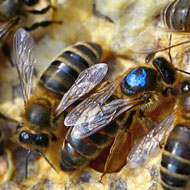
Gene research aims to protect British bees
Bees are vital for crop pollination

Entire genetic profile of bees is analysed to interpret disease threat in colonies

The Roslin Institute at the University of Edinburgh has conducted research on the UK’s native honey bees. The research included the analysis of the genetic make-up of microorganisms that live inside bees in order to gain understanding of emerging diseases.

Bees are vital for crop pollination and have been considered endangered in the UK.

Experts found that results from some Scottish hives were genetically similar to that of the UK’s native dark honey bee. These results are encouraging as it suggests that native bees are better at surviving in colder climates than southern European bees; even though the latter group have been imported to the UK for many years.

The results also discovered previously unseen microorganisms inside bees that could potentially have disease-causing properties. Infected hives may be at a greater risk of developing other illnesses. Researchers say that this knowledge could help to improve health monitoring in bee populations and in safeguarding against disease.

Dr Tim Regan, a University of Edinburgh postdoctoral research fellow, concluded: “We have created a platform that could revolutionise how we monitor threats to honey bees and maintain their health. The decreasing cost of DNA sequencing could potentially allow this type of analysis to become routine.”

Image (c) The Roslin Institute



Become a member or log in to add this story to your CPD history

Equine Disease Surveillance report released for Q4 2025

News Story 1
 The latest Equine Disease Surveillance report has been released, with details on equine disease from Q4 of 2025.

The report, produced by Equine Infectious Disease Surveillance, includes advice on rule changes for equine influenza vaccination.

Statistics and maps detail recent outbreaks of equine herpes virus, equine influenza, equine strangles and equine grass sickness. A series of laboratory reports provides data on virology, bacteriology, parasitology and toxicosis.

This issue also features a case study of orthoflavivus-associated neurological disease in a horse in the UK. 

Click here for more...
News Shorts
NSA webinar explores sheep tailing and castration

The National Sheep Association (NSA) is to host a free webinar on the castration and tail docking of lambs.

The webinar, 'Understanding the tailing and castration consultation: A guide for sheep farmers', will be hosted online on Monday, 2 March 2026 at 7.30pm.

It comes during a government consultation into the methods used for these procedures. Farmers are encouraged to engage before the consultation period closes on Monday, 9 March 2026.

The webinar offers clear and actionable guidance to support farmers to contribute meaningfully to the consultation and prepare for potential changes.

On the panel will be former SVS president Kate Hovers, farmer and vet Ann Van Eetvelt and SRUC professor in Animal Health and Veterinary Sciences Cathy Dwyer. Each panel member will utilise their own specialism and expertise to evaluate risks and outcomes to sheep farming.

Find out more about the webinar on the NSA website.


