


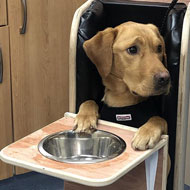
Buck’s life was in danger as a result of ‘mega-oesophagus’
A young Labrador with the life-threatening condition ‘mega-oesophagus’ has been saved thanks to a special high chair, which was designed and built by a vet and product design lecturer.
Seventeen-month-old Buck struggles to swallow enough food as a result of his condition. He weighed just half what he should at his age when he arrived at Team Edward Labrador Rescue in the East Midlands.
Specially-made chairs can help dogs with this rare condition, by sitting them upright when they eat, but none could be sourced in time for Buck.
Fortunately, a social media post prompted vet Emma Drinkall and her fiancé Nick Rowan, a product design lecturer, to create a high chair for Buck in less than 48 hours. The pair will continue to adapt the chair as Buck gains weight and grows in future.
Buck’s condition means that most of the food he consumes gets stuck in pouches in the oesophagus or is regurgitated. Dogs with this condition are at risk of developing very serious - and potentially fatal - chest infections.
Since using his new chair, however, Buck has managed to keep all his food down. He is now on a high calorie puppy diet to help him put on weight and gain strength.
University of Nottingham vet, Emma Drinkall, said: “We saw Buck’s story on social media, and I knew we just had to do something if he was going to have a chance. Luckily Nick and I have the combined expertise and experience to build the chair quickly.
“There is currently no surgery available for dogs with this condition, and as Buck is already receiving the medications that can help, the one other thing that could help him keep his food down is gravity itself. Being upright while feeding will help the food drip through the sphincter that controls access to his stomach.”
Wendy Hopewell, who runs the Team Edward charity, added: “It was just the most fabulous sight to see Buck eating in the chair and happy to be in it. To see how he sat in it straight away and get stuck in was incredible, it just pulls at your heartstrings.”
Buck image © Emma Drinkall
X-ray image © Team Edward


 BVA has announced a new series of its Building Great Workplaces lunchtime webinars.



