


Call for stricter regulation of rabbit breeders
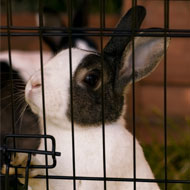
More than 50 per cent of rabbit breeders provided smaller than recommended housing.
Researchers at the Universities of Nottingham and Winchester are calling for stricter regulation of the rabbit breeding industry after a survey found that only one per cent of all breeders are licensed.
Animal welfare researcher Emma Gosling, who oversaw the work as part of her Master's degree, said that the majority of breeders in the UK appear to be unlicensed and are therefore untraceable and unaccountable for their animal’s welfare.
“I hope the new information gathered by my research will fill a gap in knowledge about the industry and foster a new awareness of best practice in rabbit welfare as well as improve licensing compliance among breeders and local councils,” she said.
The Rabbit Breeder Survey found that the most commonly bred sold rabbits were breeds with brachycephalic faces. Whilst most of the breeders provided good diets and toys, more than 50 per cent provided smaller than recommended housing.
The survey also revealed that most breeders housed most rabbits singly, against animal welfare recommendations. Furthermore, it found that most local councils did not use their licensing powers effectively to police commercial rabbits breeding.
Researchers are now calling on organisations to make use of the new study to create interventions to safeguard the welfare of rabbits used for breeding. They urge local councils to review their policies regarding the licensing of pet shops and breeders and to step up efforts to regulate the industry.
Furthermore, the team would like to see the creation of approved guidelines for managing and breeding pet rabbits. In particular, they would like to see this in England, which currently lacks approved guidance on how to meet pet rabbits’ welfare needs.
"Rabbits are the third most popular pet in the country with an estimated population of 1.5 million so it is vitally important that more is known about how these animals are kept, bred and sold,” said Dr Naomi Harvey from the University of Nottigham’s School of Veterinary Medicine.
“It is clear from the Freedom of Information request to local councils in the UK that more needs to be done to make them aware of the extent of the industry and what they can do to help improve the rabbits’ welfare using their licensing powers.”


 Defra has published guidance for the vet sector ahead of a proposed UK-EU Sanitary and Phytosanitary agreement.



