
Your data on MRCVSonline
The nature of the services provided by Vision Media means that we might obtain certain information about you.
Please read our Data Protection and Privacy Policy for details.

In addition, (with your consent) some parts of our website may store a 'cookie' in your browser for the purposes of
functionality or performance monitoring.
Click here to manage your settings.
If you would like to forward this story on to a friend, simply fill in the form below and click send.

Your friend's email:
Your email:
Your name:
 
 
Send Cancel

Electrical fault cause of fire at Chester zoo
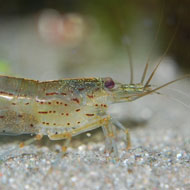
Amano shrimps were among the animals killed in the fire.
Over £140,000 raised in donations from well-wishing public

An initial investigation into the fire at Chester zoo has revealed an electrical fault as the cause.

The fire killed numerous rare species of animals and insects including cinnamon frogs, tentacled snakes, betta hendra fish, question mark cockroaches, Amano shrimps and grosbeak starlings.

A JustGiving fundraiser for the zoo has so far gained over £140,000 in donations from the public.

Cheshire fire and rescue service are maintaining their investigation but so far believe the electrical fault to be accidental.   

Many animals were able to be saved through enticing them away from the flames with food. New homes have now been found in unaffected areas of the zoo.

Speaking about the investigation, Jamie Cheston, chief operating officer at Chester zoo, said: “We’re grateful that the fire and rescue service has been able to conclude its investigation into the cause of the fire so swiftly and would again like to thank them for their valiant efforts on the day, which helped us to rescue so many animals and minimise the extent of the damage.”

Lee Shears, area manager at Cheshire fire and rescue service, commented: “Firefighters and zoo staff worked closely together in an incredibly challenging situation to evacuate the building and rescue as many animals as possible.

“The professionalism and expertise of the staff at the zoo meant that many precious species were saved.”


Become a member or log in to add this story to your CPD history

Equine Disease Surveillance report released for Q4 2025

News Story 1
 The latest Equine Disease Surveillance report has been released, with details on equine disease from Q4 of 2025.

The report, produced by Equine Infectious Disease Surveillance, includes advice on rule changes for equine influenza vaccination.

Statistics and maps detail recent outbreaks of equine herpes virus, equine influenza, equine strangles and equine grass sickness. A series of laboratory reports provides data on virology, bacteriology, parasitology and toxicosis.

This issue also features a case study of orthoflavivus-associated neurological disease in a horse in the UK. 

Click here for more...
News Shorts
NSA webinar explores sheep tailing and castration

The National Sheep Association (NSA) is to host a free webinar on the castration and tail docking of lambs.

The webinar, 'Understanding the tailing and castration consultation: A guide for sheep farmers', will be hosted online on Monday, 2 March 2026 at 7.30pm.

It comes during a government consultation into the methods used for these procedures. Farmers are encouraged to engage before the consultation period closes on Monday, 9 March 2026.

The webinar offers clear and actionable guidance to support farmers to contribute meaningfully to the consultation and prepare for potential changes.

On the panel will be former SVS president Kate Hovers, farmer and vet Ann Van Eetvelt and SRUC professor in Animal Health and Veterinary Sciences Cathy Dwyer. Each panel member will utilise their own specialism and expertise to evaluate risks and outcomes to sheep farming.

Find out more about the webinar on the NSA website.

