


Government invites discussion on rehoming banned breeds
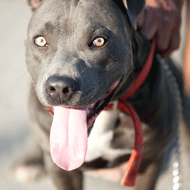
Current legislation makes it illegal to own four types of dog in the UK, including the pit bull terrier.
Animal welfare minister David Rutley has indicated that the government is prepared to explore options for allowing banned dog breeds to be rehomed.
The issue was debated in parliament last week, after the government responded to 16 recommendations made by the Environment, Food and Rural Affairs (Efra) Committee.
Cross-party MPs and animal welfare charities have called for a change in the law to allow banned breeds to be rehomed, if they are judged to have a good temperament.
Current legislation makes it illegal to own four types of dog in the UK, including the pit bull terrier. An exemption certificate can be sought from the courts but exempt dogs cannot be rehomed unless the owner dies. As a result, if the dog strays or the owner abandons or can no longer care for it, rescue charities are left with no choice but to euthanise it.
Mr Rutley described the rehoming of pit bulls as an “emotive and difficult issue”. Currently the law does not allow stray pit bulls to be placed with an owner they have never met before the court case. However, he said the government will “continue to discuss with stakeholders what can be done” and invited Efra chair Neil Parish to meet with him and relevant welfare groups for further discussion.
He went on to say that there are opportunities for some dogs to be rehomed, for example if an owner moved and abandoned a dog, but another person had got to know the dog before the move, that person could apply to be the person in change of the dog, if they were considered fit and proper by the court.
However, Mr Rutley made it clear that the government is not recommending a change in the law, which would require primary legislation.
Responding to Mr Rutley’s comments, Mr Parish said: “Blue Cross, Dogs Trust, Battersea dogs home and the RSPCA need to be confident that there is a system that allows them legally to rehome that dog. That is why I look forward to meeting the Minister and officials to try to get a legal basis for that…
“There is a lot of work to be done, because we do not want more postal workers to be attacked or for the number of dog bites to keep going up as they have… The Select Committee, the Opposition and the Government can make the law work much better, and I hope that fewer dogs of good temperament will be put down in future.”


 BVA has announced a new series of its Building Great Workplaces lunchtime webinars.



