Your data on MRCVSonline
The nature of the services provided by Vision Media means that we might obtain certain information about you.
Please read our Data Protection and Privacy Policy for details.

In addition, (with your consent) some parts of our website may store a 'cookie' in your browser for the purposes of
functionality or performance monitoring.
Click here to manage your settings.
If you would like to forward this story on to a friend, simply fill in the form below and click send.

Your friend's email:
Your email:
Your name:
 
 
Send Cancel

Researchers identify potential new antibiotics in fish slime
The mucus had been swabbed from young deep-sea and surface-dwelling fish caught off the coast of Southern California.

Mucus protects young fish from bacteria and viruses

US researchers have identified bacteria in fish that could protect against known human pathogens.

The research, which will be presented at a meeting of the American Chemical Society, identified the bacteria in the protective mucus that coats young fish.

The mucus protects fish against viruses, fungi and bacteria in their environment before they can cause infections. The slime is also high in polysaccharides and peptides which are known to have antibacterial activity.

Molly Austin from Oregon State University, who conducted some of the research, said: “Fish mucus is really interesting because the environment the fish live in is complex. They are in contact with their environment all the time with many pathogenic viruses.”

In the study, researchers isolated and screened 47 different strains of bacteria from the slime. Five bacterial extracts showed strong resistance to inhibited methicillin-resistant S. aureus (MRSA), and three repelled Candida albicans - a fungus pathogenic to humans.

Furthermore, a bacteria derived from a particular Pacific pink perch showed strong resistance against MRSA and against a colon carcinoma cell line.

The mucus had been swabbed from young deep-sea and surface-dwelling fish caught off the coast of Southern California. Researchers say they examined young fish because they have a less-developed immune system and more mucus on the outside of their scales.

The team are now interested to see if there is anything in the mucus that could help to protect humans. They are also looking to explore where fish mucus could help reduce the use of antibiotics in fish farming.

Before this, however, the researchers aim to see if the bacteria they studied were typical of the fishes’ microbiomes, or if they just happened to hitch on for a ride at the time of sampling.

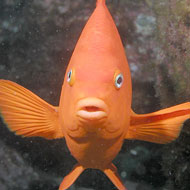
Image (C) Aquaimages/Wikimedia

Become a member or log in to add this story to your CPD history

Equine Disease Surveillance report released for Q4 2025

News Story 1
 The latest Equine Disease Surveillance report has been released, with details on equine disease from Q4 of 2025.

The report, produced by Equine Infectious Disease Surveillance, includes advice on rule changes for equine influenza vaccination.

Statistics and maps detail recent outbreaks of equine herpes virus, equine influenza, equine strangles and equine grass sickness. A series of laboratory reports provides data on virology, bacteriology, parasitology and toxicosis.

This issue also features a case study of orthoflavivus-associated neurological disease in a horse in the UK. 

Click here for more...
News Shorts
NSA webinar explores sheep tailing and castration

The National Sheep Association (NSA) is to host a free webinar on the castration and tail docking of lambs.

The webinar, 'Understanding the tailing and castration consultation: A guide for sheep farmers', will be hosted online on Monday, 2 March 2026 at 7.30pm.

It comes during a government consultation into the methods used for these procedures. Farmers are encouraged to engage before the consultation period closes on Monday, 9 March 2026.

The webinar offers clear and actionable guidance to support farmers to contribute meaningfully to the consultation and prepare for potential changes.

On the panel will be former SVS president Kate Hovers, farmer and vet Ann Van Eetvelt and SRUC professor in Animal Health and Veterinary Sciences Cathy Dwyer. Each panel member will utilise their own specialism and expertise to evaluate risks and outcomes to sheep farming.

Find out more about the webinar on the NSA website.