
Your data on MRCVSonline
The nature of the services provided by Vision Media means that we might obtain certain information about you.
Please read our Data Protection and Privacy Policy for details.

In addition, (with your consent) some parts of our website may store a 'cookie' in your browser for the purposes of
functionality or performance monitoring.
Click here to manage your settings.
If you would like to forward this story on to a friend, simply fill in the form below and click send.

Your friend's email:
Your email:
Your name:
 
 
Send Cancel

Cites bans export of live-caught African elephants to zoos
African elephants from Zimbabwe and Botswana are currently listed on Appendix II of Cites.
Near-total ban agreed after days of discussions 

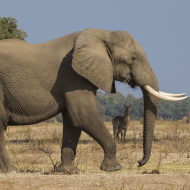
Governments have voted to ban the export of wild, live-caught elephants from Africa to zoos around the world, apart from in ‘exceptional circumstances’.

This is following a long and intense week of discussions at the 18th Cites meeting in Geneva.

African elephants from Zimbabwe and Botswana are currently listed on Appendix II of Cites, with an annotation that allows live elephants to be exported to ‘appropriate and acceptable destinations’.
Under this definition, live baby African elephants have been captured from the wild for transport to zoos in China and elsewhere.

From 2012, more than 100 elephant calves were sent from Zimbabwe to Chinese zoos.

The EU originally opposed the ban but eventually changed its vote after intensive negotiations, resulting in a change to the wording. Exports will now be allowed, only in exceptional circumstances, if approved by the Cites Animal Committee and IUCN specialist group.

Eventually, the ban was passed with 87 votes to 29, with 25 abstentions.

Wildlife director Audrey Delsink, of Humane Society International/Africa, described the decision as “momentous”.

She added: “Public sentiment is shifting, and people are increasingly outraged at the senseless and cruel practice of snatching baby elephants from the wild to live a life as a zoo exhibit…

“The definition of what is an appropriate destination is key, and the independent oversight by elephant specialists is critical, and so we will remain vigilant as that discussion develops, and fight against any attempts to justify or prolong trade in live baby elephants for captive purposes.”


Become a member or log in to add this story to your CPD history

Equine Disease Surveillance report released for Q4 2025

News Story 1
 The latest Equine Disease Surveillance report has been released, with details on equine disease from Q4 of 2025.

The report, produced by Equine Infectious Disease Surveillance, includes advice on rule changes for equine influenza vaccination.

Statistics and maps detail recent outbreaks of equine herpes virus, equine influenza, equine strangles and equine grass sickness. A series of laboratory reports provides data on virology, bacteriology, parasitology and toxicosis.

This issue also features a case study of orthoflavivus-associated neurological disease in a horse in the UK. 

Click here for more...
News Shorts
NSA webinar explores sheep tailing and castration

The National Sheep Association (NSA) is to host a free webinar on the castration and tail docking of lambs.

The webinar, 'Understanding the tailing and castration consultation: A guide for sheep farmers', will be hosted online on Monday, 2 March 2026 at 7.30pm.

It comes during a government consultation into the methods used for these procedures. Farmers are encouraged to engage before the consultation period closes on Monday, 9 March 2026.

The webinar offers clear and actionable guidance to support farmers to contribute meaningfully to the consultation and prepare for potential changes.

On the panel will be former SVS president Kate Hovers, farmer and vet Ann Van Eetvelt and SRUC professor in Animal Health and Veterinary Sciences Cathy Dwyer. Each panel member will utilise their own specialism and expertise to evaluate risks and outcomes to sheep farming.

Find out more about the webinar on the NSA website.

