
Your data on MRCVSonline
The nature of the services provided by Vision Media means that we might obtain certain information about you.
Please read our Data Protection and Privacy Policy for details.

In addition, (with your consent) some parts of our website may store a 'cookie' in your browser for the purposes of
functionality or performance monitoring.
Click here to manage your settings.
If you would like to forward this story on to a friend, simply fill in the form below and click send.

Your friend's email:
Your email:
Your name:
 
 
Send Cancel

Farmers urged to check cattle for summer mastitis
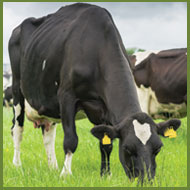
"It is essential stockpeople pay careful attention when checking cows" - Dr Basil Lowman.
SRUC expert issues warning amid rise in number of cases

Farmers are being urged to check their cattle following reports of large numbers of summer mastitis cases.

Senior beef expert Dr Basil Lowman at Scotland’s Rural College (SRUC) said: “In most parts of the country it has been an exceptional year for grass growth, but this unfortunately means it has also been an exceptional year for flies – the carriers of summer mastitis.

“Although everyone is flat out trying to bring in the harvest, it is essential stockpeople pay careful attention when checking cows.

He continued: “Animals away from the main group, hungry calves, and swollen teats and udders, are obvious signs of a problem which needs immediate investigation, as the earlier the problem is identified, the greater the chance of saving the area.”

Dr Lowman said the animals at most risk are dry cows. However, because infection levels are so high this year, they can become susceptible to mastitis within two to three months of calving.

“The most important thing to do is to graze susceptible animals in exposed fields away from trees and open water where flies breed,” he said.

He added that teat sealants, Stockholm tar, fly spray, insecticide ear tags or garlic can all be used to prevent flies settling on cattle.

Once summer mastitis occurs in cattle, the level of infection carried by flies rises significantly as they land on infected areas and fly to nearby cows.

“The best way to avoid this is to bring all infected cows indoors, which will be necessary in any case if they are to be treated,” said Dr Lowman.


Become a member or log in to add this story to your CPD history

Equine Disease Surveillance report released for Q4 2025

News Story 1
 The latest Equine Disease Surveillance report has been released, with details on equine disease from Q4 of 2025.

The report, produced by Equine Infectious Disease Surveillance, includes advice on rule changes for equine influenza vaccination.

Statistics and maps detail recent outbreaks of equine herpes virus, equine influenza, equine strangles and equine grass sickness. A series of laboratory reports provides data on virology, bacteriology, parasitology and toxicosis.

This issue also features a case study of orthoflavivus-associated neurological disease in a horse in the UK. 

Click here for more...
News Shorts
NSA webinar explores sheep tailing and castration

The National Sheep Association (NSA) is to host a free webinar on the castration and tail docking of lambs.

The webinar, 'Understanding the tailing and castration consultation: A guide for sheep farmers', will be hosted online on Monday, 2 March 2026 at 7.30pm.

It comes during a government consultation into the methods used for these procedures. Farmers are encouraged to engage before the consultation period closes on Monday, 9 March 2026.

The webinar offers clear and actionable guidance to support farmers to contribute meaningfully to the consultation and prepare for potential changes.

On the panel will be former SVS president Kate Hovers, farmer and vet Ann Van Eetvelt and SRUC professor in Animal Health and Veterinary Sciences Cathy Dwyer. Each panel member will utilise their own specialism and expertise to evaluate risks and outcomes to sheep farming.

Find out more about the webinar on the NSA website.

