


African swine fever respects no boundaries
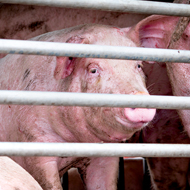
ASF has already killed hundreds of millions of pigs worldwide
African swine fever (ASF) will spread further across Asia where it has devastated herds, and no country is immune from being hit by the virus, the head of the World Organisation for Animal Health (OIE) has said.
The disease, which has hit the world’s top pork producer, China, hard, originated in Africa before spreading to Europe and Asia. It has been found in 50 countries, killing hundreds of million pigs, while reshaping global meat and feed markets; and it has been estimated that a quarter of the world’s pigs could die as a result of spread of the virus.
“We are really facing a threat that is global,” OIE director general, Monique Eloit, told Reuters in an interview. “The risk exists for all countries, whether they are geographically close or geographically distant because there is a multitude of potential sources of contamination.
“African swine fever, which is not harmful to humans, can be transmitted by a tourist bringing back a ham or sausage sandwich from a contaminated country, throwing it away and the garbage being reused by farmers to feed their pigs,” she said. “And there are additional risks from trading live animals and food products across borders and from small breeders using restaurant or train station waste to feed their stock; and in the short term we are not going towards an improvement.”
The disease has had a massive impact on pork production in China which last year accounted for half the world’s pigs – official figures show China’s herd is approximately 40 per cent down year-on-year and Rabobank predicts the herd will have halved by the end of the year.
China has already rapidly grown to become the UK’s biggest customer of pig meat. Pig meat exports so far this year to China alone are worth £93m, more than twice the value during the same period last year.
Speaking at the National Pig Association’s South Central Regional meeting in Newbury, analyst Duncan Wyatt predicted the Asian ASF crisis would ensure the global pork market remains “tight for the next year or two at least” – and, with new export plant approvals, the UK is in a better position to benefit.
“We have just started sending whole pigs in boxes to China. The high price makes it worth doing that. Until now, we might have considered China as a market for those parts of the animal we don’t eat as much, but this is an important tipping point, as it means China’s demand is overlapping with UK demand, which should have a good effect on prices,” he said.


 Defra has published guidance for the vet sector ahead of a proposed UK-EU Sanitary and Phytosanitary agreement.



