
Your data on MRCVSonline
The nature of the services provided by Vision Media means that we might obtain certain information about you.
Please read our Data Protection and Privacy Policy for details.

In addition, (with your consent) some parts of our website may store a 'cookie' in your browser for the purposes of
functionality or performance monitoring.
Click here to manage your settings.
If you would like to forward this story on to a friend, simply fill in the form below and click send.

Your friend's email:
Your email:
Your name:
 
 
Send Cancel

RCT second council to back stricter rules on fireworks
Last year alone the RSPCA received 411 calls relating to animal welfare concerns during firework displays.


Plans in place to reduce risk to wildlife and pets

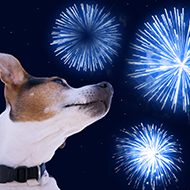
Rhondda Cynon Taf (RCT) are the latest council to back the RSPCA’s Bang Out of Order campaign, voting unanimously to work on reducing the negative impact of fireworks on animals.

The council backed plans to encourage the sale of lower decibel fireworks, as well as to arrange a public awareness campaign and ensure that all public firework displays in the area are advertised well in advance so that people can be better prepared for the sake of their animals.

Councillors will also contact the Welsh government, asking them to provide assistance and resources to further mitigate the risks that fireworks pose to animals and vulnerable people.

RCT council are the second council in Wales to vote for tighter restrictions on fireworks, following another unanimous vote from Neath Port Talbot council on 27 November 2019.

RSPCA public affairs adviser Lewis Clark commented: “It was great to see RCT Council become Wales’ second council in just a matter of hours to support measures which could make a real difference for animals facing a fireworks nightmare each year.


“We receive so many calls related to welfare concerns for animals connected to fireworks – so RCT Councillors have made a hugely important statement in unanimously backing this motion.”

Last year alone the RSPCA received 411 calls relating to animal welfare concerns during firework displays.


“Preparedness is so important,” continued Mr Clark, “and better advertising of displays and a public awareness campaign could make all the difference in ensuring people know what steps to take to keep pets and other animals safe, and when.


“By lobbying the Welsh Government, too, to utilise levers at their disposal - we hope we can make Wales a safer place for animals when fireworks are being set off; encouraging responsible use, better information and the promotion of lower-noise alternatives.”


Become a member or log in to add this story to your CPD history

Equine Disease Surveillance report released for Q4 2025

News Story 1
 The latest Equine Disease Surveillance report has been released, with details on equine disease from Q4 of 2025.

The report, produced by Equine Infectious Disease Surveillance, includes advice on rule changes for equine influenza vaccination.

Statistics and maps detail recent outbreaks of equine herpes virus, equine influenza, equine strangles and equine grass sickness. A series of laboratory reports provides data on virology, bacteriology, parasitology and toxicosis.

This issue also features a case study of orthoflavivus-associated neurological disease in a horse in the UK. 

Click here for more...
News Shorts
NSA webinar explores sheep tailing and castration

The National Sheep Association (NSA) is to host a free webinar on the castration and tail docking of lambs.

The webinar, 'Understanding the tailing and castration consultation: A guide for sheep farmers', will be hosted online on Monday, 2 March 2026 at 7.30pm.

It comes during a government consultation into the methods used for these procedures. Farmers are encouraged to engage before the consultation period closes on Monday, 9 March 2026.

The webinar offers clear and actionable guidance to support farmers to contribute meaningfully to the consultation and prepare for potential changes.

On the panel will be former SVS president Kate Hovers, farmer and vet Ann Van Eetvelt and SRUC professor in Animal Health and Veterinary Sciences Cathy Dwyer. Each panel member will utilise their own specialism and expertise to evaluate risks and outcomes to sheep farming.

Find out more about the webinar on the NSA website.

