


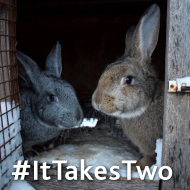
Position statement calls for greater awareness about the benefits of housing rabbits in pairs
Rabbit medicine should be featured more prominently on the veterinary curriculum so that vets are better equipped to care for the species, three leading veterinary bodies have said in a new position statement.
The British Veterinary Association (BVA), The British Zoological Society (BVZS) and the British Small Animal Veterinary Association (BSAVA) have joined forces to launch a series of recommendations to improve rabbit welfare in the UK.
Among the recommendations includes a call for greater awareness about the health and welfare benefits of housing rabbits in compatible pairs: that is two of the same sex (preferably neutered) or neutered of the opposite sex. It also notes that vets have a key part to play in advising and educating owners about the importance of housing rabbits together.
BSAVA President Sue Paterson said: “Rabbits are popular pets with their own unique welfare needs which may not be met, often simply due to lack of in-depth knowledge as opposed to any wilful intention to neglect their needs when it comes to companionship.
“Vets, along with relevant practice staff, are well-placed to provide advice to existing or prospective owners on how to best provide for their pet rabbit’s needs. In supporting improvements to the health and welfare of rabbits, BSAVA will continue to work collaboratively with other organisations to achieve these shared goals and interests.”
The recommendations call for better integration of rabbit medicine and husbandry into the veterinary curriculum, so that their care can be confidently carried out by any general practitioner.
They also call on pet sellers to inform potential owners that rabbits should not be housed alone, and to ensure they only sell hutches with enough space to hold to rabbits.
In Spring 2019, BVA's Voice of the Veterinary Profession survey found that 73 per cent of companion animal vets have seen pet rabbits who were not having their welfare needs met. Of the rabbits seen by these vets, a staggering 42 per cent were housed alone.
Research shows that rabbits housed in pairs benefit from greater mental and physical health and that it allows them to exhibit natural behaviour (such as mutual grooming).
BVA president Daniella Dos Santos said: “Whether they are outside or inside, rabbits are highly sociable animals and benefit from a suitable companion. Year after year, statistics show that a large proportion of the UK’s pet rabbits still live alone.
"I am really pleased to be launching this joint position in which we can offer owners, veterinary professionals, and other stakeholders - from pet sellers to Government - strong advice on the importance of companionship and best practice."
BVZS President, Peter Kettlewell said: "Rabbits are the third most popular mammal pet in the UK, and unfortunately, their health and welfare needs are often not met.
"The better the conditions that we keep rabbits in, the less welfare and medical problems they will have during their lives. Along with the correct diet, keeping rabbits in suitable social groups is vital to healthy happy pets. Good food and nice company make for a healthier rabbit.”


 BVA has announced a new series of its Building Great Workplaces lunchtime webinars.



