


Increase magnesium before calving, cattle farmers advised
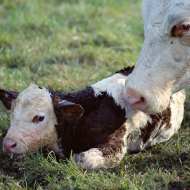
Farmers are being advised to increase magnesium in suckler cow pre-calving minerals.
SAC Consulting, part of Scotland’s Rural College, is advising farmers to increase the level of magnesium in minerals given to suckler cows before calving.
The advice comes after a study by the National Research Council (NRC) in the United States found that magnesium from rock sources has about half the absorption levels than previously thought.
Karen Stewart from SAC Consulting said: “The current guideline is 10 per cent magnesium in a pre-calving mineral for normal silage rations and I think the revised absorption coefficients would justify an increase to 15 per cent magnesium to take account of the reduced absorption.”
Low levels of magnesium can lead to staggers - a condition that causes cows to lose their balance. It is also critical for cows to mobilise their calcium reserves and to minimise the risk of slow calving.
The NRC and Bill Weiss, a professor of dairy cattle nutrition at Ohio State University, have given some indications of changes they are making to availability for magnesium. They suggest that cows absorb less magnesium than previously thought.
In the UK, magnesium oxide is the most common form used in mineral supplements. SAC Consulting says that given the recent information, and depending on diet, it would be advisable to increase magnesium levels in suckler cow pre-calving minerals.
Ms Stewart added: “Magnesium plays a vital role in helping cows mobilise their own reserves of calcium to help with muscle contractions. Low magnesium is associated with slow calvings. If staggers is considered a particular risk or the silage has particularly high potassium levels as a result of slurry applications, further supplementation may be considered.
She continued “This spring the risk of slow calvings will be higher as a result of cows being high body condition score.Getting a full silage analysis including minerals, and planning pre-calving rations with nutritional advice, will be particularly important ahead of spring calving 2020.”


 Defra has published guidance for the vet sector ahead of a proposed UK-EU Sanitary and Phytosanitary agreement.



