


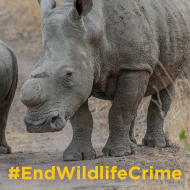
Calls for new protocols to tackle illegal trade
Multiple conservation groups, government representatives and academics have come together to put out a global call to action to end wildlife crime, as part of UN World Wildlife Day 2020.
The groups form the International Coalition to End Wildlife Crime, which was established in 2018 in order to develop plans and strategies to disrupt the crimes that impact endangered species, such as poaching, logging and illegal trade.
Representatives from the coalition attended a special event – held on Tuesday 3 March in the House of Lords and sponsored by Born Free and the ADM Capital Foundation – to discuss measures to help combat crimes which threaten animal welfare.
“Today, prominent members of the wildlife protection community are launching a proposal to end wildlife crime before it’s too late,” said Lord Randall of Uxbridge. “We urgently need transformative action to stop one million species from going extinct and all the disastrous ecological consequences that would ensue.”
The coalition is calling for an international agreement to end the illegal wildlife trade, in the form of a new protocol under the UN Convention against Transnational Organised Crime (UNCTOC) specifically covering wildlife crime.
“While we have made some significant gains over the past decade in tackling wildlife crime, these gains are fragile and serious environment-related crimes are slipping through the net. Recent evidence of the scale of the impacts on ecosystems, economies and public health, reflect the need for a comprehensive legally binding regime to tackle wildlife crime, embedded within the framework of international criminal law,” said John Scanlon AO, former secretary general of the Convention on International Trade in Endangered Species (CITES).
According to the coalition’s statement, governments have largely relied on CITES for their legal framework on the wildlife trade. As an international agreement, CITES obliges countries to put in place mechanisms to limit and monitor international trade in listed species. However, it does not oblige countries to criminalise illegal wildlife trade.
The coalition feels that a new agreement under UNCTOC would provide better protection for endangered species, as it has adopted protocols including clear definitions for multiple serious transnational organised crimes.
Will Travers OBE, executive president of the Born Free Foundation, said: “On UN World Wildlife Day, #EndWildlifeCrime urges the United Nations Office on Drugs and Crime (UNODC) and United Nations General Assembly (UNGA) to bring wildlife crime within the legal framework of the UNCTOC, thereby reflecting the clear resolve of the global community to treat such crimes as serious crimes.”


 BVA has announced a new series of its Building Great Workplaces lunchtime webinars.



