
Your data on MRCVSonline
The nature of the services provided by Vision Media means that we might obtain certain information about you.
Please read our Data Protection and Privacy Policy for details.

In addition, (with your consent) some parts of our website may store a 'cookie' in your browser for the purposes of
functionality or performance monitoring.
Click here to manage your settings.
If you would like to forward this story on to a friend, simply fill in the form below and click send.

Your friend's email:
Your email:
Your name:
 
 
Send Cancel

Volunteers sought to record mammal sightings in their gardens
"Living with Mammals is something positive we can do at a difficult time." - David Wembridge, PTES.

Wildlife charity urges public to aid in conservation while staying at home

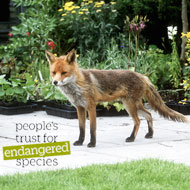
The People’s Trust for Endangered Species (PTES) is calling for volunteers to assist in conservation efforts during lockdown by recording wildlife sightings in their gardens.

As part of PTES’ annual Living with Mammals survey, which began on 30 March, people are being asked to spend a little time each week recording sightings of mammals – or the signs they leave behind, such as tracks or droppings – in their gardens, or from their windows or balconies.

This information will be used to help conservationists to understand how wildlife populations are changing and will inform future conservation projects.
People in Scotland and northern England are particularly encouraged to participate, as fewer people live in these regions than in the south, so there are fewer records of mammal numbers available.

“For a species like hedgehogs, that are still widespread but whose numbers have been going down, it’s as important to get as good an idea of how they’re doing in Scotland, say, as elsewhere, where we have more records.” Explains David Wembridge, mammal surveys coordinator at PTES.

“And for species whose strongholds are in the north, these might be the majority of records we receive. Three-quarters of red squirrels, for example, and almost all pine martens, in Britain are found in Scotland. So, we’re keen to hear from anyone living there or in the north of England.”

“Surveys like Living with Mammals, which run annually, are the only way to tell if our conservation work is working, and where it’s needed. To date over 3,000 gardens across Britain have been surveyed by volunteers, which is fantastic, but we still need more records to help us understand, and encourage, the wild mammals on our doorstep.”

To take part in the 2020 survey please visit the PTES website. PTES is also encouraging the public to share their wildlife photos using #LivingWithMammals. 

Become a member or log in to add this story to your CPD history

Equine Disease Surveillance report released for Q4 2025

News Story 1
 The latest Equine Disease Surveillance report has been released, with details on equine disease from Q4 of 2025.

The report, produced by Equine Infectious Disease Surveillance, includes advice on rule changes for equine influenza vaccination.

Statistics and maps detail recent outbreaks of equine herpes virus, equine influenza, equine strangles and equine grass sickness. A series of laboratory reports provides data on virology, bacteriology, parasitology and toxicosis.

This issue also features a case study of orthoflavivus-associated neurological disease in a horse in the UK. 

Click here for more...
News Shorts
NSA webinar explores sheep tailing and castration

The National Sheep Association (NSA) is to host a free webinar on the castration and tail docking of lambs.

The webinar, 'Understanding the tailing and castration consultation: A guide for sheep farmers', will be hosted online on Monday, 2 March 2026 at 7.30pm.

It comes during a government consultation into the methods used for these procedures. Farmers are encouraged to engage before the consultation period closes on Monday, 9 March 2026.

The webinar offers clear and actionable guidance to support farmers to contribute meaningfully to the consultation and prepare for potential changes.

On the panel will be former SVS president Kate Hovers, farmer and vet Ann Van Eetvelt and SRUC professor in Animal Health and Veterinary Sciences Cathy Dwyer. Each panel member will utilise their own specialism and expertise to evaluate risks and outcomes to sheep farming.

Find out more about the webinar on the NSA website.


