

Your data on MRCVSonline
The nature of the services provided by Vision Media means that we might obtain certain information about you.
Please read our Data Protection and Privacy Policy for details.

In addition, (with your consent) some parts of our website may store a 'cookie' in your browser for the purposes of
functionality or performance monitoring.
Click here to manage your settings.
If you would like to forward this story on to a friend, simply fill in the form below and click send.

Your friend's email:
Your email:
Your name:
 
 
Send Cancel

Government recognises test and trace challenge for vets
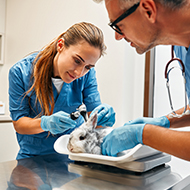
Veterinary professionals will not be asked to self-isolate if they have taken all safety precautions.

Practices that have taken all precautions will not be asked to self-isolate.

Public Health England (PHE) has issued updated advice to the BVA and the RCVS that recognises the challenge of test and trace for veterinary practices.

Under the new guidance, veterinary professionals in England who have taken all precautions, such as wearing appropriate PPE, will not be considered as contacts and will not be asked to self-isolate.

In the event that self-isolation is required, but would lead to a major problem with the provision of veterinary services to support animal health and welfare in the area, veterinary practices can discuss the situation with the local PHE Health Protection Team who will consider a local risk assessment.

The move comes after veterinary practices raised fears about the contact tracing programme potentially forcing them to shut down, and the impact this disruption could have in their local communities. BVA president Daniella Dos Santos, raised the issue with Defra Minister Lord Goldsmith and the UK Chief Veterinary Officer earlier this year, and they pledged to take up the matter.

Welcoming the news, Ms Santos said: “This is a huge breakthrough for veterinary practices who have been working under the fear of the contact tracing programme potentially forcing them to shut down. It’s the number one concern that members have been raising with me through our COVID Clinics and in other communications, and I’m delighted that we now have a positive outcome for them in England.

“We’re incredibly grateful to Lord Goldsmith and UK CVO Christine Middlemiss for their support in getting the new PHE guidance approved. We’ll continue to raise the issue in Scotland, Wales and Northern Ireland and hope that a similar approach is taken."

She added: “It’s important to remember that the contact trace information is confidential so if a client or a contact outside your workplace identifies you as a contact, you may still need to self-isolate. Veterinary practices and professionals should continue to follow social distancing and biosecurity guidance."

Become a member or log in to add this story to your CPD history

Equine Disease Surveillance report released for Q4 2025

News Story 1
 The latest Equine Disease Surveillance report has been released, with details on equine disease from Q4 of 2025.

The report, produced by Equine Infectious Disease Surveillance, includes advice on rule changes for equine influenza vaccination.

Statistics and maps detail recent outbreaks of equine herpes virus, equine influenza, equine strangles and equine grass sickness. A series of laboratory reports provides data on virology, bacteriology, parasitology and toxicosis.

This issue also features a case study of orthoflavivus-associated neurological disease in a horse in the UK. 

Click here for more...
News Shorts
NSA webinar explores sheep tailing and castration

The National Sheep Association (NSA) is to host a free webinar on the castration and tail docking of lambs.

The webinar, 'Understanding the tailing and castration consultation: A guide for sheep farmers', will be hosted online on Monday, 2 March 2026 at 7.30pm.

It comes during a government consultation into the methods used for these procedures. Farmers are encouraged to engage before the consultation period closes on Monday, 9 March 2026.

The webinar offers clear and actionable guidance to support farmers to contribute meaningfully to the consultation and prepare for potential changes.

On the panel will be former SVS president Kate Hovers, farmer and vet Ann Van Eetvelt and SRUC professor in Animal Health and Veterinary Sciences Cathy Dwyer. Each panel member will utilise their own specialism and expertise to evaluate risks and outcomes to sheep farming.

Find out more about the webinar on the NSA website.

