
Your data on MRCVSonline
The nature of the services provided by Vision Media means that we might obtain certain information about you.
Please read our Data Protection and Privacy Policy for details.

In addition, (with your consent) some parts of our website may store a 'cookie' in your browser for the purposes of
functionality or performance monitoring.
Click here to manage your settings.
If you would like to forward this story on to a friend, simply fill in the form below and click send.

Your friend's email:
Your email:
Your name:
 
 
Send Cancel

Lords back Agriculture Bill amendment on animal welfare
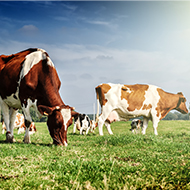
The amendment could prevent the import of products produced to low animal welfare standards.
Vets welcome move that could stop imports produced to lower animal welfare standards.

The House of Lords has voted on a crucial clause that imposes a requirement for food imports to meet or exceed domestic standards.

British Veterinary Association (BVA) president James Russell said the move was 'a huge win for animal welfare' and a decisive vote of confidence in the UK's farming industry.

On Tuesday evening (22 September), peers debated and voted on several amendments that would require imports to meet high animal welfare standards, and one placing duty on the state to have due regard for animal sentience in policy development.

Amendment 93 on Food Standards, tabled by Lord Grantchester, Baroness Bakewell of Hardington Mandeville, Lord Krebs & Baroness Boycott, was voted through, defeating the Government by 95 votes.

The BVA had previously urged the Government not to allow animal welfare standards to be compromised in pursuit of future trade deals.

Mr Russell said: “This result is a huge win for animal welfare and a decisive vote of confidence in the UK’s farming industry, which works incredibly hard to keep our globally renowned welfare standards high.

“We have long argued that the UK cannot commit to raising the bar domestically while allowing in goods that don’t meet the high standards that British consumers rightly want and expect.”

He added: “Hopes had been pinned on the House of Lords to hold the Government to account and question how allowing in lower quality imports could possibly enable them to honour their manifesto commitment to maintain and improve on animal health and welfare standards. As vets, we are delighted that peers delivered the right result last night and it is essential that the Government listens.”


Become a member or log in to add this story to your CPD history

Equine Disease Surveillance report released for Q4 2025

News Story 1
 The latest Equine Disease Surveillance report has been released, with details on equine disease from Q4 of 2025.

The report, produced by Equine Infectious Disease Surveillance, includes advice on rule changes for equine influenza vaccination.

Statistics and maps detail recent outbreaks of equine herpes virus, equine influenza, equine strangles and equine grass sickness. A series of laboratory reports provides data on virology, bacteriology, parasitology and toxicosis.

This issue also features a case study of orthoflavivus-associated neurological disease in a horse in the UK. 

Click here for more...
News Shorts
NSA webinar explores sheep tailing and castration

The National Sheep Association (NSA) is to host a free webinar on the castration and tail docking of lambs.

The webinar, 'Understanding the tailing and castration consultation: A guide for sheep farmers', will be hosted online on Monday, 2 March 2026 at 7.30pm.

It comes during a government consultation into the methods used for these procedures. Farmers are encouraged to engage before the consultation period closes on Monday, 9 March 2026.

The webinar offers clear and actionable guidance to support farmers to contribute meaningfully to the consultation and prepare for potential changes.

On the panel will be former SVS president Kate Hovers, farmer and vet Ann Van Eetvelt and SRUC professor in Animal Health and Veterinary Sciences Cathy Dwyer. Each panel member will utilise their own specialism and expertise to evaluate risks and outcomes to sheep farming.

Find out more about the webinar on the NSA website.

