
Your data on MRCVSonline
The nature of the services provided by Vision Media means that we might obtain certain information about you.
Please read our Data Protection and Privacy Policy for details.

In addition, (with your consent) some parts of our website may store a 'cookie' in your browser for the purposes of
functionality or performance monitoring.
Click here to manage your settings.
If you would like to forward this story on to a friend, simply fill in the form below and click send.

Your friend's email:
Your email:
Your name:
 
 
Send Cancel

UK avian flu level threat raised to 'high'
Two cases of avian influenza and increasing reports in Europe have prompted chief vets to increase the UK's avian flu level threat from 'medium' to 'high'.

Chief vets urge bird keepers to strengthen their biosecurity measures.

The UK's chief veterinary officers (CVOs) have raised the risk level of avian influenza in wild birds from 'medium' to 'high', after two confirmed cases of avian influenza in England and further cases reported in mainland Europe.

Chief vets from England, Scotland, Wales and Northern Ireland have also raised the risk of level for the disease being introduced to poultry farms in Great Britain to 'low' to 'medium'. The risk of avian influenza in Northern Ireland remains medium for wild birds and low for poultry, but is being kept under review.

A strain of H5N2 avian influenza was first confirmed on Monday (2 November) at a small commercial farm in Kent. All 480 birds on site have been humanely culled, and a 1km Low Pathogenic Avian Influenza (LPAI) Restricted Zone has been introduced to curb the spread of the disease. 

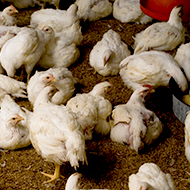
A separate, unrelated strain of highly pathogenic H5N8 was later confirmed at a broiler farm in Cheshire on Tuesday (3 November). A 3km protection zone and 10km surveillance zone were put in place, and all 13,500 birds at the farm have been humanely culled. 

A joint statement for the UK's CVOs reads: “We have acted quickly to prevent the spread of disease at both sites in England and are continuing to monitor the situation closely. Bird keepers should remain alert for any signs of disease and report suspected disease immediately.

“It is important now more than ever that bird keepers ensure they are doing all they can to maintain and strengthen good biosecurity on their premises to ensure we prevent further outbreaks.”


In recent weeks, there have been several confirmed reports of avian influenza in wild birds including geese and swans in the Netherlands and north of Germany. These wild birds are all on the waterfowl flyway from breeding grounds in western Russia, where the H5N8 strain was reported in poultry in mid-October.


Become a member or log in to add this story to your CPD history

Equine Disease Surveillance report released for Q4 2025

News Story 1
 The latest Equine Disease Surveillance report has been released, with details on equine disease from Q4 of 2025.

The report, produced by Equine Infectious Disease Surveillance, includes advice on rule changes for equine influenza vaccination.

Statistics and maps detail recent outbreaks of equine herpes virus, equine influenza, equine strangles and equine grass sickness. A series of laboratory reports provides data on virology, bacteriology, parasitology and toxicosis.

This issue also features a case study of orthoflavivus-associated neurological disease in a horse in the UK. 

Click here for more...
News Shorts
NSA webinar explores sheep tailing and castration

The National Sheep Association (NSA) is to host a free webinar on the castration and tail docking of lambs.

The webinar, 'Understanding the tailing and castration consultation: A guide for sheep farmers', will be hosted online on Monday, 2 March 2026 at 7.30pm.

It comes during a government consultation into the methods used for these procedures. Farmers are encouraged to engage before the consultation period closes on Monday, 9 March 2026.

The webinar offers clear and actionable guidance to support farmers to contribute meaningfully to the consultation and prepare for potential changes.

On the panel will be former SVS president Kate Hovers, farmer and vet Ann Van Eetvelt and SRUC professor in Animal Health and Veterinary Sciences Cathy Dwyer. Each panel member will utilise their own specialism and expertise to evaluate risks and outcomes to sheep farming.

Find out more about the webinar on the NSA website.

