
Your data on MRCVSonline
The nature of the services provided by Vision Media means that we might obtain certain information about you.
Please read our Data Protection and Privacy Policy for details.

In addition, (with your consent) some parts of our website may store a 'cookie' in your browser for the purposes of
functionality or performance monitoring.
Click here to manage your settings.
If you would like to forward this story on to a friend, simply fill in the form below and click send.

Your friend's email:
Your email:
Your name:
 
 
Send Cancel

Warning over scam microchip registry
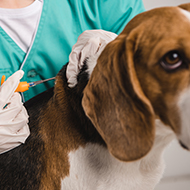
The database quoted by UK Pet Chip Registry does not conform to UK government standards.
Website claims to add pets' details to a national database that does not meet government standards.

The Chartered Trading Standards Institute (CTSI) has issued a warning about a website advertised on Google that offers pet microchip registration.

The website, named UK Pet Chip Registry, claims that it will add the pet's microchip details to a so-called National Pet Microchip Registration Database for a charge of £15. 

The CTSI states that the quoted database fails to meet government standards for pet microchipping, and therefore does not appear on the list of government-endorsed databases.

The warning comes amid a rise in pet ownership during the COVID-19 pandemic. Late last year, Dogs Trust reported a spoke in demand for puppies, and Google searchers for 'Buy a Puppy' increased by 115 per cent since lockdown began. 

"It is vital that when purchasing a puppy, members of the public must register the chip on one of the 15 databases verified by the UK government. If they do not, they risk a fine of up to £500,” commented Steph Young, CTSI lead officer for animal welfare.

"The database quoted by UK Pet Chip Registry does not conform to UK government standards, and signing up to it alone puts the user at risk of a fine and the needless cost of the money used to pay for it. The public should always follow government guidance, not paid-for adverts on search engines."

Katherine Hart, a fellow Lead Officer at CTSI, added: "The COVID-19 pandemic has led to a great deal of opportunism and in many cases outright scams. Many people suffer from loneliness during the lockdown, and purchasing a furry companion is an increasingly popular option.

"We are all so much more vulnerable now. The public must be increasingly vigilant, sceptical and above all, check the law and UK government advice when making these decisions. Ignorance of the law excuses no one - make sure you register your pet on a verified database."


Become a member or log in to add this story to your CPD history

Equine Disease Surveillance report released for Q4 2025

News Story 1
 The latest Equine Disease Surveillance report has been released, with details on equine disease from Q4 of 2025.

The report, produced by Equine Infectious Disease Surveillance, includes advice on rule changes for equine influenza vaccination.

Statistics and maps detail recent outbreaks of equine herpes virus, equine influenza, equine strangles and equine grass sickness. A series of laboratory reports provides data on virology, bacteriology, parasitology and toxicosis.

This issue also features a case study of orthoflavivus-associated neurological disease in a horse in the UK. 

Click here for more...
News Shorts
NSA webinar explores sheep tailing and castration

The National Sheep Association (NSA) is to host a free webinar on the castration and tail docking of lambs.

The webinar, 'Understanding the tailing and castration consultation: A guide for sheep farmers', will be hosted online on Monday, 2 March 2026 at 7.30pm.

It comes during a government consultation into the methods used for these procedures. Farmers are encouraged to engage before the consultation period closes on Monday, 9 March 2026.

The webinar offers clear and actionable guidance to support farmers to contribute meaningfully to the consultation and prepare for potential changes.

On the panel will be former SVS president Kate Hovers, farmer and vet Ann Van Eetvelt and SRUC professor in Animal Health and Veterinary Sciences Cathy Dwyer. Each panel member will utilise their own specialism and expertise to evaluate risks and outcomes to sheep farming.

Find out more about the webinar on the NSA website.

