
Your data on MRCVSonline
The nature of the services provided by Vision Media means that we might obtain certain information about you.
Please read our Data Protection and Privacy Policy for details.

In addition, (with your consent) some parts of our website may store a 'cookie' in your browser for the purposes of
functionality or performance monitoring.
Click here to manage your settings.
If you would like to forward this story on to a friend, simply fill in the form below and click send.

Your friend's email:
Your email:
Your name:
 
 
Send Cancel

Mars Petcare making significant progress towards fish sourcing goal
The WWF and Mars Petcare have renewed their global partnership until 2025.

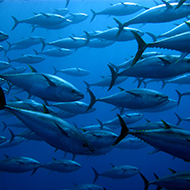
Pet food company now sources 81 per cent of fish used from more sustainable sources.

Mars Petcare has announced that it is advancing towards its commitment to procure 100 per cent of fish for some of its pet food recipes from more sustainable sources.

In 2010, the company partnered with the World Wildlife Fund (WWF), setting the target of seeking 100 per cent sustainable sources of fish.

A new joint report from Mars Petcare and the WWF details the work that has been done over the past decade to achieve this goal. In this report, the company confirms that it now sources 81 per cent of fish used from more sustainable sources and it sources no endangered fish species.

The WWF and Mars Petcare have renewed their global partnership until 2025; Both to advance Mars' sourcing goals and to influence the fishing sector to move towards sustainability.

Mars Petcare states that it is working with organisations such as the Marine Stewardship Council, Monterey Bay Seafood Watch and the Aquaculture Stewardship Council. As it continues to work towards its goal, the company will regularly evaluate where it sources its fish, the types of fish used, and practices across its supply chain.

Professor David Smith, chief marine scientist at Mars, Incorporated, said: “As we prepare for a future of more than 10 billion people and more pets, sustainable business practice which is led by science and cares about the planet and our oceans is essential.

“When we cemented the partnership with WWF over a decade ago, we were deeply aware that many fisheries around the world were on the verge of collapse and that several fish species were critically endangered and threatened by extinction.

“As we continue to play our part in supporting a future for ocean ecosystems, we are focused on sourcing from sustainably managed fisheries using no endangered species according to the IUCN Red List.”


Become a member or log in to add this story to your CPD history

Equine Disease Surveillance report released for Q4 2025

News Story 1
 The latest Equine Disease Surveillance report has been released, with details on equine disease from Q4 of 2025.

The report, produced by Equine Infectious Disease Surveillance, includes advice on rule changes for equine influenza vaccination.

Statistics and maps detail recent outbreaks of equine herpes virus, equine influenza, equine strangles and equine grass sickness. A series of laboratory reports provides data on virology, bacteriology, parasitology and toxicosis.

This issue also features a case study of orthoflavivus-associated neurological disease in a horse in the UK. 

Click here for more...
News Shorts
NSA webinar explores sheep tailing and castration

The National Sheep Association (NSA) is to host a free webinar on the castration and tail docking of lambs.

The webinar, 'Understanding the tailing and castration consultation: A guide for sheep farmers', will be hosted online on Monday, 2 March 2026 at 7.30pm.

It comes during a government consultation into the methods used for these procedures. Farmers are encouraged to engage before the consultation period closes on Monday, 9 March 2026.

The webinar offers clear and actionable guidance to support farmers to contribute meaningfully to the consultation and prepare for potential changes.

On the panel will be former SVS president Kate Hovers, farmer and vet Ann Van Eetvelt and SRUC professor in Animal Health and Veterinary Sciences Cathy Dwyer. Each panel member will utilise their own specialism and expertise to evaluate risks and outcomes to sheep farming.

Find out more about the webinar on the NSA website.

