


Government to ban shark fin trade
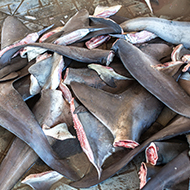
"It is encouraging to see the UK addressinf the fin trade as an element of overfishing." - Ali Hood, director of conservation for the Shark Trust.
The UK Government has announced that it intends to ban the import and export of detached shark fins to aid conservation efforts.
Despite the practice of shark finning having been banned for 20 years, it is currently still legal to import shark fins, and shark fin products.
It is hoped that this ban will assist in the campaign for stronger international action to protect sharks from shark finning and unsustainable fishing practices.
This intended legislation comes after 143 species of shark have been listed as 'under threat', ranging from vulnerable to critically endangered.
Lord Goldsmith, who announced the legislation, commented: “Shark finning is indescribably cruel and causes thousands of shark to die terrible deaths. It is also unforgivably wasteful. The practice is rightly banned in UK waters, but the trade continues, with serious implications for the future of these magnificent creatures.
“That is why we are now banning the import both of detached shark fins and shark fin products. Our action will not only help boost shark numbers, it will send a clear message that we do not support an industry that is forcing many species to the brink of extinction.”
Shark conservationist James Glancy commented on the ban: “New measures from the UK Government to protect sharks from the cruel shark fin trade are welcomed by conservationists.
“The unsustainable rate at which sharks are caught by global fishing fleets, as bycatch or deliberately for their fins and meat, has caused a significant decline in worldwide shark populations.
“Sharks have been around for millions of years and play a crucial role for the health of our oceans yet, as a consequence of human activity, many shark species are critically endangered and face extinction in some regions.”


 Defra has published guidance for the vet sector ahead of a proposed UK-EU Sanitary and Phytosanitary agreement.



