
Your data on MRCVSonline
The nature of the services provided by Vision Media means that we might obtain certain information about you.
Please read our Data Protection and Privacy Policy for details.

In addition, (with your consent) some parts of our website may store a 'cookie' in your browser for the purposes of
functionality or performance monitoring.
Click here to manage your settings.
If you would like to forward this story on to a friend, simply fill in the form below and click send.

Your friend's email:
Your email:
Your name:
 
 
Send Cancel

Dogs Trust issues fireworks advice
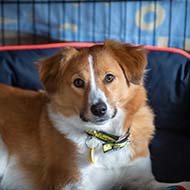
"There are lots of things dog owners can do to make fireworks less stressful for thier dogs" - Jenna Kiddie, Dogs Trust.
Public urged to take action to help their pets.

With the seasonal celebrations of Halloween and Bonfire Night just around the corner, national charity Dogs Trust has issued a timely reminder to pet owners to help make fireworks less stressful for their animals.

From walking dogs before dark to providing safe places for animals to hide, the charity has set out eight simple tips pet owners can take to ensure their pet's stay happy and healthy this autumn. 

Jenna Kiddie, head of canine behaviour at Dogs Trust, explained: “Dogs have approximately four times more sensitive hearing than humans, so the loud cracks and bangs of fireworks can often be a terrifying and confusing experience for them. Fireworks tend to be sudden, unpredictable and bright. This combination can be distressing and have a lasting impact on dogs.

“There are lots of things dog owners can do to help make fireworks less stressful for their dogs. Simple steps such as providing safe spaces for them to hide or settling them before the fireworks start can make a big difference.”

Dogs Trust is urging anyone considering their own fireworks display to think about the welfare of their four-legged friends and others in the neighbourhood by following its Firework Dog Code. The charity also provides free sound therapy to help gradually expose puppies to various noises in a positive way. 

Jenna continued: “If your dog is very worried by fireworks or other loud noises, they might need longer-term treatment. If that is the case, it would be a good idea for owners to have a chat with their vet. They can check there are no underlying health conditions that might be affecting behaviour, and then owners can discuss referral to an accredited behaviourist for support and tailored advice.”


Become a member or log in to add this story to your CPD history

Equine Disease Surveillance report released for Q4 2025

News Story 1
 The latest Equine Disease Surveillance report has been released, with details on equine disease from Q4 of 2025.

The report, produced by Equine Infectious Disease Surveillance, includes advice on rule changes for equine influenza vaccination.

Statistics and maps detail recent outbreaks of equine herpes virus, equine influenza, equine strangles and equine grass sickness. A series of laboratory reports provides data on virology, bacteriology, parasitology and toxicosis.

This issue also features a case study of orthoflavivus-associated neurological disease in a horse in the UK. 

Click here for more...
News Shorts
NSA webinar explores sheep tailing and castration

The National Sheep Association (NSA) is to host a free webinar on the castration and tail docking of lambs.

The webinar, 'Understanding the tailing and castration consultation: A guide for sheep farmers', will be hosted online on Monday, 2 March 2026 at 7.30pm.

It comes during a government consultation into the methods used for these procedures. Farmers are encouraged to engage before the consultation period closes on Monday, 9 March 2026.

The webinar offers clear and actionable guidance to support farmers to contribute meaningfully to the consultation and prepare for potential changes.

On the panel will be former SVS president Kate Hovers, farmer and vet Ann Van Eetvelt and SRUC professor in Animal Health and Veterinary Sciences Cathy Dwyer. Each panel member will utilise their own specialism and expertise to evaluate risks and outcomes to sheep farming.

Find out more about the webinar on the NSA website.

