
Your data on MRCVSonline
The nature of the services provided by Vision Media means that we might obtain certain information about you.
Please read our Data Protection and Privacy Policy for details.

In addition, (with your consent) some parts of our website may store a 'cookie' in your browser for the purposes of
functionality or performance monitoring.
Click here to manage your settings.
If you would like to forward this story on to a friend, simply fill in the form below and click send.

Your friend's email:
Your email:
Your name:
 
 
Send Cancel

Glue traps ban completes House of Commons journey
The Bill has now moved on to the House of Lords, where it will be taken forward by RSCPA vice president and former chair Baroness Fookes.

The RSPCA welcomes the news. 

The Glue Traps (Offences) Bill has completed its passage through the House of Commons, bringing a ban on the use of glue traps in England a step closer.

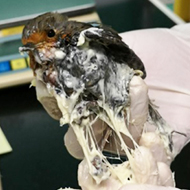
Glue traps, consisting of a sheet of plastic, cardboard or wood coated with non-drying adhesive to catch rodents, have long been campaigned against by animal welfare charity the RSPCA owing to the severe suffering they cause. 

Between 2016 and 2021, the RSCPA received 263 incident reports about the use of glue traps, with non-target species frequently becoming sometimes fatally harmed by the traps.

Sponsored by Jane Stevenson, Wolverhampton North East MP, the Private Members' Bill now has the backing of the UK Government, and would make using a glue trap to catch a rodent illegal in England, unless under license. 

Evie Button, from the RSPCA's wildlife department, commented: "Glue traps are horrible devices, which have no place in modern England. Our officers have repeatedly been left shocked and horrified by the awful injuries inflicted to wildlife, pets and other animals.

"It's fantastic therefore that a ban on deadly glue traps is a step nearer, as this Bill completed its House of Commons journey - and we'd like to thank Jane Stevenson MP for all her efforts in making this happen.

"We now look forward to working with Baroness Fookes and other Members of the House of Lords; as we edge closer to ridding England of glue traps; which are indiscriminate and risk causing animals severe suffering.

"Unfortunately, glue traps are widely available and a cheap method of rodent control - but there are other, more humane methods available too such as humane deterrence.

"We hope any ban on glue traps extends to their sale, as well as their use - and urge British nations to work together to overcome any barriers in law to stopping their sale; and work to get these devices out of shopping baskets and into the history books."


Images (C) RSPCA

 

Become a member or log in to add this story to your CPD history

Equine Disease Surveillance report released for Q4 2025

News Story 1
 The latest Equine Disease Surveillance report has been released, with details on equine disease from Q4 of 2025.

The report, produced by Equine Infectious Disease Surveillance, includes advice on rule changes for equine influenza vaccination.

Statistics and maps detail recent outbreaks of equine herpes virus, equine influenza, equine strangles and equine grass sickness. A series of laboratory reports provides data on virology, bacteriology, parasitology and toxicosis.

This issue also features a case study of orthoflavivus-associated neurological disease in a horse in the UK. 

Click here for more...
News Shorts
NSA webinar explores sheep tailing and castration

The National Sheep Association (NSA) is to host a free webinar on the castration and tail docking of lambs.

The webinar, 'Understanding the tailing and castration consultation: A guide for sheep farmers', will be hosted online on Monday, 2 March 2026 at 7.30pm.

It comes during a government consultation into the methods used for these procedures. Farmers are encouraged to engage before the consultation period closes on Monday, 9 March 2026.

The webinar offers clear and actionable guidance to support farmers to contribute meaningfully to the consultation and prepare for potential changes.

On the panel will be former SVS president Kate Hovers, farmer and vet Ann Van Eetvelt and SRUC professor in Animal Health and Veterinary Sciences Cathy Dwyer. Each panel member will utilise their own specialism and expertise to evaluate risks and outcomes to sheep farming.

Find out more about the webinar on the NSA website.


