


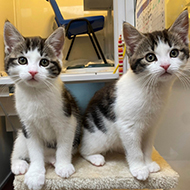
Charity 'stretched to breaking point' with kittens.
Mayhew, a London-based animal welfare charity, is appealing to the public for foster carers after an unusually high intake of kittens.
The charity saw its highest weekly intake of abandoned kittens since the charity began, with 30 kittens left at the Kensal Green headquarters in one week alone (16-23 May).
Lisa Guiney, Mayhew's operations manager, said: “Our cattery has become a kitten orphanage in a matter of just a few weeks because there are so many abandoned mums and babies arriving at our door.
“This time of year is normally busy with litters because the warm Spring weather brings out cats' instincts to mate, but because London has a very high population of unneutered cats we are literally overflowing.”
Between January and May of this year, Mayhew has seen an unprecedented 202 cats and kittens abandoned at its centre.
With the current cost of living crisis and financial issues, many people have felt unable to keep their pets, the charity explained. Its facilities are being 'stretched to breaking point', and the Mayhew team is incredibly concerned about exceeding capacity.
"The kittens are now taking over pens reserved for strays, and older cats and we are close to exceeding capacity in an already limited space,” Lisa continued.
“We urgently need volunteer kitten foster carers we can call on to help with the kitten crisis.
“However, should understand that being a kitten foster carer can be challenging as well as being incredibly rewarding. It is ideally suited to people who aren't working, or to couples who can take on shifts to care for the kittens.
“People who work full time from home with a flexible work schedule might want to consider it, but my team and I are on hand to discuss what is involved with applicants.”
Further information on how to become a kitten foster carer can be found on the Mayhew website.
Image (C) Mayhew


 Eligible members of BEVA will be able to vote for their Council team until Monday, 17 August 2026. Members will have received an election email on 17 July.



