


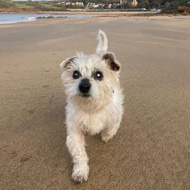
Tiny Tim proves that older dogs with disabilities can thrive.
A cheeky elderly blind dog who came into the care of the RSPCA has found his forever home, as his foster carer decided to permanently adopt him.
Tiny Tim, an 11-year-old Westie, arrived at the RSPCA's Llys Nini Animal Centre in Wales in March 2022, after his elderly owner could no longer care for him.
Tim came to the centre with a range of health problems, including an ear infection, sore skin and a severely matted coat. Tim also has sight loss, so needs support with that.
Sally Humphries, foster carer and kennel team leader at Llys Nini Animal Centre, didn't intend to adopt Tim, but his personality won her over, he steals food from the fridge when she isn't looking, and loves to climb and go for walks.
Discussing why she decided to adopt Tim, Sally said: "Although I didn't initially plan to adopt Tim, he's completely won me and my dad over with his cheeky personality. He's settled in so well and really enjoys the company of my other rescue dog, Lady.
"As time went on, I felt it would be unfair to expect him to start all over again with someone new and strange surroundings, particularly at his age, and more so because he's blind.
"He's wonderful company and a great example of how an older dog with a disability has so much to give and get out of life."
Sally discussed the process of bringing Tim home: “When I first got Tim home I set up a camera to monitor how he was coping and we started by keeping him on a lead and doing laps around different rooms to help familiarise him with the space.
"I put different textures in certain places, for example, a rug in front of the sofa and a towel under his water bowl to get him used to his surroundings.
"Despite his advancing years and the fact that we were advised he would probably need palliative care, he's got a real zest for life. He's definitely young at heart and I've had to be quite fit to keep up with him!
“When we go out and about I'm his eyes, so that means doing things like making sure other dogs do not approach him too quickly. He loves being taken for a walk and sniffing out new smells and he'll climb up on things if you're not looking, so his blindness isn't holding him back.”
Using Tim's success as an example, the RSPCA is encouraging potential dog owners to consider elderly and disabled dogs, reminding the public that blind dogs and sighted dogs are no different with regard to their ability and desire to learn.
Image (C) RSPCA


 BVA has announced a new series of its Building Great Workplaces lunchtime webinars.



