Your data on MRCVSonline
The nature of the services provided by Vision Media means that we might obtain certain information about you.
Please read our Data Protection and Privacy Policy for details.

In addition, (with your consent) some parts of our website may store a 'cookie' in your browser for the purposes of
functionality or performance monitoring.
Click here to manage your settings.
If you would like to forward this story on to a friend, simply fill in the form below and click send.

Your friend's email:
Your email:
Your name:
 
 
Send Cancel

Concerns for animal welfare as CO2 plant halts production
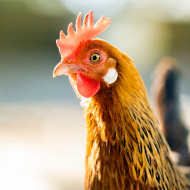
Carbon dioxide is commonly used to stun animals before slaughter.
MP and vet Dr Neil Hudson calls for government action against 'potentially crippling' impacts of the closure.

MP and vet Neil Hudson is warning the government against an impending animal welfare crisis, following an announcement that the UK's last remaining active fertiliser plant and carbon dioxide producer will halt ammonia production. 

CF Fertilisers UK - a subsidiary of US-based CF Industries – has said that it will temporarily pause ammonia production and begin importing the gas once the plant has been shut down, citing uneconomical production.

In a statement on his website, Mr Hudson warns that the closure could have 'potentially crippling' impacts on food security, food prices and animal welfare. Carbon dioxide is crucial to UK food production, as it is commonly used to stun animals before slaughter and to keep fresh food cold during transit.

Dr Hudson says that he has written to the Secretary of State for Environment, Food and Rural Affairs calling for urgent action against the significant impacts of the closure. He has also brought the matter to the attention of the EFRA Select Committee, on which he sits.

Dr Hudson said: “As a vet, I’m acutely aware of the impact this could have on our nation’s animal welfare. Carbon dioxide is used in some humane slaughter processes in the pig and poultry sectors. I am asking that the Government acts urgently so that we do not see pigs and birds being unable to be moved off farms, and the drastic negative animal implications that could ensue.”

Dr Hudson has repeatedly called for urgent government action to prevent the halting of ammonia production. In June, he warned ministers about the uncertain future of CF Fertilisers UK and raised it as an emergency topic of the EFRA committee. He has also tabled urgent questions to parliament on the issue.

He added: “This issue is not going away, and I will continue to speak out so that the country does not sleepwalk into a potentially catastrophic food security and animal welfare crisis.” 

Become a member or log in to add this story to your CPD history

Equine Disease Surveillance report released for Q4 2025

News Story 1
 The latest Equine Disease Surveillance report has been released, with details on equine disease from Q4 of 2025.

The report, produced by Equine Infectious Disease Surveillance, includes advice on rule changes for equine influenza vaccination.

Statistics and maps detail recent outbreaks of equine herpes virus, equine influenza, equine strangles and equine grass sickness. A series of laboratory reports provides data on virology, bacteriology, parasitology and toxicosis.

This issue also features a case study of orthoflavivus-associated neurological disease in a horse in the UK. 

Click here for more...
News Shorts
NSA webinar explores sheep tailing and castration

The National Sheep Association (NSA) is to host a free webinar on the castration and tail docking of lambs.

The webinar, 'Understanding the tailing and castration consultation: A guide for sheep farmers', will be hosted online on Monday, 2 March 2026 at 7.30pm.

It comes during a government consultation into the methods used for these procedures. Farmers are encouraged to engage before the consultation period closes on Monday, 9 March 2026.

The webinar offers clear and actionable guidance to support farmers to contribute meaningfully to the consultation and prepare for potential changes.

On the panel will be former SVS president Kate Hovers, farmer and vet Ann Van Eetvelt and SRUC professor in Animal Health and Veterinary Sciences Cathy Dwyer. Each panel member will utilise their own specialism and expertise to evaluate risks and outcomes to sheep farming.

Find out more about the webinar on the NSA website.