


PPID quality of life tool to be developed
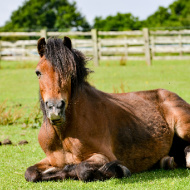
Pituitary Pars Intermedia Dysfunction can cause laminitis.
Researchers from the Royal Veterinary College (RVC) have announced a project to develop a new tool to assess the quality of life of horses and ponies with Pituitary Pars Intermedia Dysfunction (PPID).
A hormone disorder that affects the pituitary gland of horses, PPID often causes the animals to develop laminitis, leading to extreme pain, instability of the pedal bone within the hoof capsule and in some cases, euthanasia.
As well as these, PPID can also cause weight loss, behavioural changes and lethargy.
Owing to the potential negative impact of PPID symptoms on an equine's quality of life, researchers are will develop an assessment tool to assist veterinary professionals and equine owners in making informed decisions about care.
Professor Nicola Menzies-Gow, of the RVC, said: “This is an exciting project that will hopefully allow development of a tool that can be used to objectively assess the quality of life of horses and ponies with PPID and determine which aspects of the disease and its treatment have the greatest impact on this.”
Set to be developed over the course of three years, the tool will be created first by interviewing equine veterinary surgeons and owners of equines with PPID to ascertain which aspects of the disorder appear to impact quality of life the most.
The data and information gathered from this will be used to develop a questionnaire for a larger number of horse owners, and following this, the question-based tool will be created.
For the remaining two years of the study, the tool will be used to assess 140 horses and ponies newly diagnosed with PPID. These equines will be followed over the two-year period to see how quality of life is impacted, and whether the drug pergolide improves this.
Ultimately, the study aims to determine the effect of pergolide on the quality of life of equines diagnosed with PPID, and to assist veterinary professionals and owners in decision-making regarding treatments or euthanasia.
The research will be led by Nicola Menzies-Gow, Professor of Equine Medicine at the RVC, Christine Nicol, Professor of Animal Welfare at the RVC, Dr Edd Knowles and Dr Imogen Schofield from CVS.


 Defra has published guidance for the vet sector ahead of a proposed UK-EU Sanitary and Phytosanitary agreement.



