


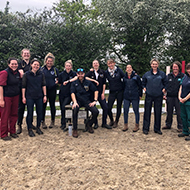
Following a 15-month hiatus, the clinics are helping horses again.
The education and welfare clinics run by the British Equine Veterinary Association (BEVA) Trust and the British Horse Society (BHS) have successfully returned post-hiatus, put into place owing to COVID-19.
Over the past 12 months, 435 horses and ponies in the UK have been treated by the clinics, which have been running for seven years.
Offering education, dental care, farriery, worming, microchipping and passporting for equines, as well as castration if needed, the clinics are run by BEVA volunteers, equine veterinary nurses, students and farriers.
BEVA Trust Chair, Julian Samuelson, commented on the reopening of the clinics: “It’s great to have our clinics up and running again and in just a year we have been able to help an impressive number of horses and ponies.
“Our volunteers, both at home and overseas, have been outstanding with their dedication and tireless hard work.
“We are grateful for the close partnerships we have between BEVA and leading national and overseas equine welfare organisations.”
Over the seven years the clinics have helped a total of 1631 horses and ponies, and over 300 BEVA volunteers have taken part.
Equine veterinary nurse Marie Rippingale shared their experience volunteering at the clinics: “I volunteered as a Registered Equine Veterinary Nurse (REVN) at an education and welfare castration clinic recently at Stoneleigh Park, Warwickshire.
“This is the second clinic I have volunteered at and both experiences have been very positive.
“My role as an REVN was to assist in setting up the drugs table, making sure the clinical waste was managed properly, working out drug doses and drawing medication up ready for use. I also made up the enzymatic disinfectant to the correct concentration and helped to clean and disinfect the emasculators and other surgical instruments used.
“I also got involved with the castrations by monitoring the general anaesthetics and recovering the horses after the procedure.
“I was able to talk to the owners of the horses and assist them with loading the patients ready for them to go home.
“The patients seen at these clinics are often young and unhandled, and it is nice to be able to talk to the clients about the handling of them.
“Overall, I had a really good time, and working with a great group of people with the combined goal of improving the welfare of the horses at the clinic, was extremely rewarding. I would thoroughly recommend this as a volunteering experience for equine veterinary nurses.”
BEVA Trust is seeking volunteers for future clinics, and anyone interested should contact Leaya Slater on leaya@beva.org.uk for further information.
Image (C) BEVA Trust


 Defra has published guidance for the vet sector ahead of a proposed UK-EU Sanitary and Phytosanitary agreement.



