


World Horse Welfare reacts to transport recommendations
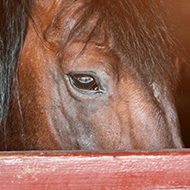
World Horse Welfare's founding campaign seeks to prevent needless long journeys to slaughter in Europe.
World Horse Welfare, the UK's largest equine charity, has reacted to the European Commission's (EC) recommendations to improve the conditions during the transport of horses.
The EC's scientific advisors presented a report on animal transport in Europe, and World Horse Welfare has welcomed its recommendations regarding shorter journeys, allowing more space and better training for people involved in the transport of horses.
Chief executive of World Horse Welfare, Roly Owers, commented on the recommendations: “We welcome this report which acknowledges what we have been saying for years: the longer the journey, the more horses can suffer, especially when conditions are not right.
'These recommendations echo many of our own, including the need for shorter journeys, increased space allowance and better training for everyone involved in transporting horses.
'The report is an irrefutable case for change, and I very much hope that their recommendations will be taken on board, alongside a specified maximum journey time limit.
“In the shadow of Brexit there is a real danger that animal transport requirements in GB and EU will significantly differ. World Horse Welfare is working to seek as close alignment as possible with animal welfare and health rules, including disease control.
'This will hopefully ensure the welfare of equines as they are transported between the EU and Great Britain, but also allow for ease of compliance for transporters.”
In the recommendations, the scientific advisors stated that horses should not be transported in temperatures above 25 degrees Celsius inside the vehicle.
They also stipulate that each animal should have a minimum of 40cm space in excess of both width and length, and that overall journey times should be reduced, with stationary rest, feed and watering provided for a minimum of 30 minutes every four hours.


 Defra has published guidance for the vet sector ahead of a proposed UK-EU Sanitary and Phytosanitary agreement.



