


Eight new vets and six new VN s have passed their respective entrance exams.
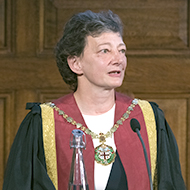
RCVS president Melissa Donald has formally welcomed eight new veterinary surgeons and six new veterinary nurses, who were all trained overseas, onto their respective registers.
In a virtual ceremony on Wednesday (21 September), Dr Donald took each candidate through their professional declarations and urged them to use their skills to make a better world for the animals under their care.
Within her address, she said: “You have overcome many obstacles to get to this place, and no one can take that away from you. You should be so proud. As a small profession, the friendships and connections you will make during your professional careers will last a lifetime, treasure these relationships and take every opportunity to develop them everywhere you go."
To practise in the UK, overseas-trained veterinary surgeons and nurses, who have received a qualification that is not recognised by the RCVS, must first pass an exam that will allow them to register.
Veterinary Surgeons are required to pass the RCVS Statutory Membership Examination, consisting of written papers and practical clinical exams. Veterinary nurses must pass the RCVS VN pre-examination, consisting of a series of clinical skills and practical tests taken from the RCVS Day One Skills for VNs.
Before being welcomed onto their respective registers, RCVS chief executive Lizzie Lockett praised the candates for their hard work and dedication, adding: “I am in total admiration of our successful candidates here today who studied for, took and passed their exams during a period of continued uncertainty due to Covid and other global factors.
“Today’s new veterinary members all passed an online written examination and then went on to sit the OSCE at Glasgow Vet School in July. The new veterinary nurse members had to demonstrate that they had a qualification similar to that completed by veterinary nurses in the UK before sitting their OSCE at MYF Training Aldershot or Hartpury University Gloucester.
She added: “All this during a time when we were never quite sure what the latest situation with Covid might be, or even if there would be any trains running in the UK. Despite all these challenges, the new members we have here today passed the Statutory Membership Examination, and the new associates have passed the Pre-registration Examination, and I’m very pleased to be able to welcome you as new members and associates of the College.”
This year’s successful veterinary surgeons who attended the ceremony were:
- Mariana Ashley, Fluminense Federal University, Brazil
- Varsha Balachandra Kumar, Maharashtra Animal and Fishery Sciences University, India
- Nivedita Barve, Maharashtra Animal and Fishery Sciences University, India
- Laia Bonich Aranda, University of Lleida, Spain
- Inam Ul Haq, University of Veterinary and Animal Sciences, Pakistan
- Matheus Nerone, Unicesumar, Brazil
- Ruth Ribeiro, Mumbai Veterinary College, India
- Hameedunisha Tajudeen, University Putra Malaysia, Malaysia
This year’s successful veterinary nurses who attended the ceremony were:
- Catherine Basford, Australia
- Shannon Caruana, Northern Virginia Community College, USA
- Ninky Mkhabela, University of Pretoria, South Africa
- Catherine Moon, Platt College, USA
- Shannon Norton, University of Pretoria, South Africa
- Danielle Walters, USA
Dr Donald added: “The veterinary world now is totally different from when I graduated. It is continually evolving as evidence and science progress. The changes you will see are unimaginable but at the heart of all must be our safeguarding of animal health and welfare.
“With every animal comes some form of human contact. Communication is critical, as critical as double ligating an ovarian artery. Clinical skills are important, but never underestimate the non-technical ones. So as your careers progress, use all your skills to make a better world for the animals under your care in whichever field you go into.”


 BVA has announced a new series of its Building Great Workplaces lunchtime webinars.



