


New standards proposed for farmed fish welfare
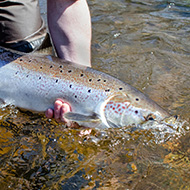
Proposals structures fish health around three main pillars; routine operations, handling and slaughter.
The Aquaculture Stewardship Council (ASC), a global certification organisation for farmed seafood, is calling for the UK to extend animal welfare laws to fisheries.
Under the ASC's new draft welfare standards, which aim to improve current aquaculture practices for fish welfare, all farmed fish certified with an ASC label will need to be slaughtered in a more humane manner.
Along with more humane slaughter practices, the ASC is also proposing stricter rules regarding the health management of farmed fish, requirements for water health and handling.
The new criteria includes detailed requirements for employee training, with an emphasis on handling operations. These include requirements on crowding and taking the fish out of their normal rearing environment.
To prevent the suffering of farmed fish, the proposed ASC standards will require farms to make stunning compulsory, as well as eliminate the use of asphyxia, CO2, salt baths, ammonia baths and evisceration as killing methods.
Discussing the role of veterinary and fish health professionals in the new proposal, a spokesperson for the ASC told MRCVSOnline: “The new content reinforces the relevant role veterinarians and fish health professionals play within the field of aquaculture. For example, several indicators require veterinary review and endorsement.
“The new proposal introduces the concept of welfare being more than just the freedom of negative stimuli, but the exposure to positive ones.
“It also introduces best practices when it comes to slaughter, an area significantly neglected in aquaculture when compared to other food producing animals.
“It requires the involvement of veterinarians/fish health professionals on the health management and follow up of farms (through the need of a Fish Health Management Plans). Thus, all in all, the new draft brings fish welfare to an equivalent level to that of other farmed animals.”
Further information can be found on the ASC website.


 Defra has published guidance for the vet sector ahead of a proposed UK-EU Sanitary and Phytosanitary agreement.



