


The collection provides free access to evidence reviews.
The Equine Veterinary Journal (EVJ) has announced a new virtual collection exploring evidence synthesis and its importance as an evaluation tool.
Evidence synthesis is a term used to describe various methodological approaches to systematically review, appraise, and summarise evidence in specific area. The method is not widely used in the equine veterinary sphere and differs from conventional literature or narrative reviews, which are not required to have a specified search strategy or methodology.
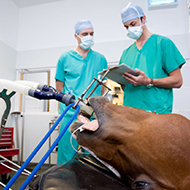
The EVJ special virtual collection provides free access to evidence reviews on diverse areas in which evidence synthesis has been used, including the recovery of horses from general anaesthesia and the efficacy of furosemide for exercise-induced pulmonary haemorrhage.
The collection will expand as new reviews become available and includes an introduction by Sarah Freeman, a professor of Veterinary Surgery at the Univerity of Nottingham.
Professor Freeman said: “Evidence synthesis makes an important contribution towards generating the evidence base which underpins equine clinical practice. The challenge compared to human medicine is that equine veterinary data sets are much smaller, and study approaches and methodologies often vary significantly, which means that it may not be possible to combine or collate data sets.
“Given this shortfall, scoping reviews can be helpful to identify what information is out there, find areas where a systematic review could be performed, and provide a useful summary for all the studies in a particular area.”
Professor Celia Marr, editor of the EVJ, added: “As increasing numbers of evidence syntheses are published, they will expand our understanding of the current bodies of evidence in veterinary medicine.
“The existing studies are already informing us on how we use evidence in our practices and policies, and it is encouraging to anticipate how they will shape our development of future research, to generate the best evidence as the norm, in every case.”
The virtual issue is available at beva.onlinelibrary.wiley.com
Image (C) BEVA.


 Defra has published guidance for the vet sector ahead of a proposed UK-EU Sanitary and Phytosanitary agreement.



