


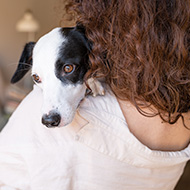
The Freedom Project accommodates dogs so owners can flee abuse.
In a worrying new report, Dogs Trust has revealed that it has seen a 55 per cent increase in dogs being referred to its specialist domestic abuse service.
Dogs Trust Freedom Project, launched in 2004, supports people fleeing domestic abuse by providing safe, temporary accommodation for their dogs.
The service has seen 1,213 dogs referred to the Freedom Project service between January and September of this year, compared to 782 referrals during the same period in 2021.
As the organisation faces a growing demand on all services due to the cost of living crisis, the vital service provided by the Freedom Project needs more specialist foster carers to accommodate the rise in demand and continue to support everyone who reaches out for support.
Laura Saunders, manager of the project, said: "Unfortunately, we are seeing an increase in demand for our service, so it’s more important than ever that we are there to support anyone experiencing domestic abuse who needs to flee to safety with their pet.
“We see first-hand the ways that perpetrators use dogs to coerce, control, physically harm and threaten within abusive relationships. This is incredibly frightening for survivors and is often aimed to leave people isolated.
“We have heard of perpetrators not letting survivors walk their dogs alone, stopping them from accessing vet care for their dogs or being able to spend money on dog food and even repeatedly threatening to harm, kill or ‘get rid’ of their dogs.
“To instil fear and entrap, perpetrators prey on the strong bonds people have with their beloved pets - making these animals vulnerable to abuse because of the psychological and emotional damage that this causes.
"As many refuges are unable to accept pets, survivors are understandably concerned about their dog’s safety when they need to escape; the Freedom Project offers them a vital lifeline.
“Whilst we are pleased to have been able to help so many people, there is still very much a need for our service, and we urgently need more foster carers across the UK so that we can continue this life-saving work.”
Dogs Trust works collaboratively with Cats Protection to support people fleeing domestic abuse, and Amy Hyde, Paws Protect manager, added: “Cats Protection has seen a 58 per cent increase in referrals to our specialist domestic abuse cat fostering service, Paws Protect, so we know just how important it is for survivors to ensure that their cats will also be safe when they access refuge or emergency housing,
“The bond that we have with our cats is so important and sadly this can be exploited by perpetrators, with many pets physically harmed or threatened with abuse as a tool to coerce and control.
“The number of cats we have cared for this year has increased by 32 per cent and we want to ensure that we are here for each and every cat who needs us, but we can only do this with the support of our amazing volunteer foster carers.”
Further information on both projects can be found on the Freedom Project and Paws Protect websites.
For access to the service, donations, or if you can help support the Freedom Project, email freedomprojects@dogstrust.org.uk or call 0800 298 9199.
Paws Protect can be reached on pawsprotect@cats.org.uk or 0345 260 1280.


 BVA has announced a new series of its Building Great Workplaces lunchtime webinars.



