


Captive animals experience physical changes, study suggests
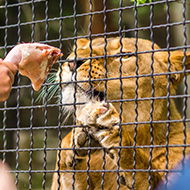
The study found that captive-bred lions have weakened jaws owing to soft foods.
A new study by researchers in Australia suggests that animals bred in captivity can experience significant changes to their bodies, behaviour and health, affecting their survival upon their release into the wild.
Conservationists at Australian National University (ANU) found that the conditions animals experience in captivity are often very different to what they'd face in the wild, leading them to change in various ways.
The changes are known as phenotypic changes and can take different forms. Examples include fish reared in aquariums taking on different body shapes, butterflies that forget how to migrate and captive-bred lions having weakened jaws owing to soft foods.
Study author Dejan Stojanovic, a conservation biologist at ANU, said: "The world is facing an extinction crisis, and many people are doing the best they can to save at-risk species. Captive breeding and release will become an increasingly important tool to save species from extinction.
"But our review shows that breeding animals in captivity may sometimes result in unexpected changes that could disadvantage them after their release to the wild. If animals change in captivity to the point that they have difficulty surviving and breeding in the wild, then we need to take a closer look at why this problem arises and work out how to fix it."
Exactly what aspects of life in captivity can drive these changes is not yet understood. Researchers say that it's also unclear exactly what impacts these changes can have on the recovery of endangered wild populations.
Study co-authors Dr Ross Crates and Professor Rob Heinsohn said: "Importantly, we hope our review demonstrates there are a range of opportunities to study why these changes occur, what impacts they have and how we can address them to help give captive-bred animals the best possible chance of flourishing in the wild."
The study, The phenotypic costs of captivity, is published in Biological Reviews.


 Defra has published guidance for the vet sector ahead of a proposed UK-EU Sanitary and Phytosanitary agreement.



