


Study reveals insights into ferret boredom
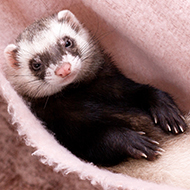
Sleeping more than usual and scratching at enclosure walls were the main behaviours owners used to differentiate rabbit boredom from other emotions.
Educating pet owners about the emotional intelligence of ferrets may help to improve ferret management and welfare, new research suggests.
The study by the Royal Veterinary College (RVC) analysed some 600 responses to an online questionnaire sent to ferret owners worldwide to assess the impact of boredom on ferret welfare.
It found that most owners (93%) believed ferrets could experience boredom, and that housing with other ferrets, human interaction, and exploring new items or places were the most important ways to prevent this.
Nevertheless, owners who doubted their ferrets could feel boredom gave them only an average of 11 types of environmental enrichment, such as toys and shelters, compared to the 13 types provided by owners who perceived ferrets as able to get bored.
The study, published in the journal Animals, also assessed the behaviours owners associated with boredom. Sleeping more than usual and scatching at enclosure walls were the main behaviours owners used to differentiate ferret boredom from other emotions.
Yawning, resting and pacing acround the enclosure were also suggested, which coincides with thories that boredom in animals causes active seeking behaviour and excessively inactive behaviour.
The findings also suggest that pet owners who doubt a ferret's ability to experience boredom may inadvertantly offer their pets fewer enrichment activities, and potentially negatively impact their welfare.
Dr Charlotte Burn, a senior lecturer in animal welfare and behaviour science at the RVC, said: “Boredom is an unusual emotion because it causes both restless activity and drowsy inactivity, as individuals try and fail to find stimulation. This really ties in with what ferret owners recognised as signalling boredom in their pets, because they described the ferrets alternating between scratching at their enclosures, as if trying to escape, and then sleeping too much.
“That combination of behaviour also gives us some insight into how distressing it can be for captive animals to have nothing to do day after day, so it really matters that owners provide enough enrichment to occupy their pets.”
Alice Dancer, a PhD student at the RVC, and lead author of the paper, said: “It’s a really encouraging sign for pet ferret welfare that most owners believe ferrets can experience boredom. We’ve all experienced boredom ourselves and can testify that it’s an unpleasant emotion when we can’t avoid it.
“Understanding how we can recognise boredom, and crucially, how we can prevent it in our pets is incredibly important for improving their welfare. With the help of pet ferret owners from around the world we are a step further in understanding a bored ferret’s behaviour, and some of the ways we can try and prevent it.”


 Defra has published guidance for the vet sector ahead of a proposed UK-EU Sanitary and Phytosanitary agreement.



