


Traveller-owned horse welfare good, study finds
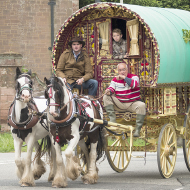
"Our findings show that Traveller-owned horses are well looked after, contrary to perceptions from previous research" - Dr Marie Rowland.
Research from the Royal (Dick) School of Veterinary Studies and Scotland's Rural College (SRUC) has found that Traveller-owned horses generally benefit from good health and welfare.
The first study of its kind to assess the welfare of Travellers' horses, the assessment challenges perceptions made by previous studies regarding the standards of care for horses in travelling communities.
Assessing 104 horses owned by travellers and self-described Gypsies, researchers collected data over a two-year period from horses at horse fairs, owners' homes and yards in the UK and Ireland.
A horse welfare protocol was developed to evaluate horse health and behaviour, provision of revision and management based on relevant criteria to Traveller-owned horses. Alongside this, a qualitative behaviour assessment tool was created with input from the travelling community, to measure emotional and physical condition.
Dr Marie Rowland, author on the study, explained: “Our findings show that Traveller and Gypsy-owned horses are well looked after, contrary to perceptions from previous research.
“These results, from the first study of its kind, show that Traveller and Gypsy-owned horses are well cared for and enjoy good health and welfare. This is a positive outcome and a significant step in increasing awareness of the true extent of horse welfare concerns in Traveller and Gypsy-owned horses.”
Outcomes from the study suggested that overall, the health and welfare of horses assessed was found to be of a good standard. The horses also had a positive emotional state.
Results showed that 81 per cent of the horses had an optimal body condition score, and the same percentage responded positively to the voluntary animal approach test.
While the study provided a generally positive overview, it provided opportunities to highlight risk factors for equine welfare. The most common welfare issue found in the assessment was hoof neglect (27 per cent), with hoof cracks and breakages being the most frequent (19 per cent).
Published in Animals, 'The Welfare of Traveller and Gypsy Owned Horses in the UK and Ireland' is open access.


 Defra has published guidance for the vet sector ahead of a proposed UK-EU Sanitary and Phytosanitary agreement.



