
Your data on MRCVSonline
The nature of the services provided by Vision Media means that we might obtain certain information about you.
Please read our Data Protection and Privacy Policy for details.

In addition, (with your consent) some parts of our website may store a 'cookie' in your browser for the purposes of
functionality or performance monitoring.
Click here to manage your settings.
If you would like to forward this story on to a friend, simply fill in the form below and click send.

Your friend's email:
Your email:
Your name:
 
 
Send Cancel

Brachycephalic Working Group unveils new strategy
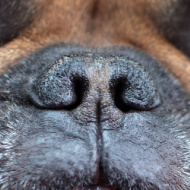
Strategy considers how to change wider public attitudes to extreme conformations in brachycephalic dogs.
Five-year strategy identifies next steps.

The UK Brachycephalic Working Group (BWG) has committed to a five-year strategy to advance its work to improve the lives of flat-faced dogs.

Designed collaboratively by the group, the strategy identifies three core challenges:

  •  dramatically reducing the numbers and popularity of dogs with brachycephaly
  •  promoting a more moderate and healthier body shape for future dogs with brachycephaly
  •  reducing the negative impacts of brachycephaly on the current generation of dogs with brachycephaly.

In order to create the strategy and outline the direction of the BWG, the organisation conducted a review. A questionnaire was created and distributed to BWG members and external groups with an interest in the welfare of brachycephalic dogs such as veterinary bodies and dog breed clubs.

Respondents were asked how they felt about the BWG, and what needs to be done to increase impact, and the results of this formed the basis of the updated plan.

Dr Dan O'Neill, BWG chair, said: “BWG understands that the serious health problems associated with the flat-faced body shape can cause many dogs to suffer and considers that the health and welfare problems linked to breeding for a flat face are one of the UK’s leading canine welfare priorities.

“This new strategy lays out a plan to redress many of these issues and we call on everybody to ‘Stop and think before buying a flat-faced dog’.”

The five-year strategy outlines the actions required by the group as a whole, and by individual members, and displays the actions and aspirations involved in these.

Actions the BWG has committed to include working to prevent the inappropriate use of imagery of brachycephalic dogs in advertising and developing and promoting a Brachycephalic Health Assessment veterinary consultation framework.

The full strategy document can be accessed here.

Become a member or log in to add this story to your CPD history

Equine Disease Surveillance report released for Q4 2025

News Story 1
 The latest Equine Disease Surveillance report has been released, with details on equine disease from Q4 of 2025.

The report, produced by Equine Infectious Disease Surveillance, includes advice on rule changes for equine influenza vaccination.

Statistics and maps detail recent outbreaks of equine herpes virus, equine influenza, equine strangles and equine grass sickness. A series of laboratory reports provides data on virology, bacteriology, parasitology and toxicosis.

This issue also features a case study of orthoflavivus-associated neurological disease in a horse in the UK. 

Click here for more...
News Shorts
NSA webinar explores sheep tailing and castration

The National Sheep Association (NSA) is to host a free webinar on the castration and tail docking of lambs.

The webinar, 'Understanding the tailing and castration consultation: A guide for sheep farmers', will be hosted online on Monday, 2 March 2026 at 7.30pm.

It comes during a government consultation into the methods used for these procedures. Farmers are encouraged to engage before the consultation period closes on Monday, 9 March 2026.

The webinar offers clear and actionable guidance to support farmers to contribute meaningfully to the consultation and prepare for potential changes.

On the panel will be former SVS president Kate Hovers, farmer and vet Ann Van Eetvelt and SRUC professor in Animal Health and Veterinary Sciences Cathy Dwyer. Each panel member will utilise their own specialism and expertise to evaluate risks and outcomes to sheep farming.

Find out more about the webinar on the NSA website.


