


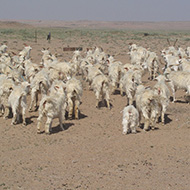
The project aims to combat the fatal effects of locoweeds to livestock.
Researchers in Wales have made significant progress in efforts to prevent weeds from poisoning livestock.
Working in collaboration with Northwest University, China, the team from Aberystwyth University has been examining why some weeds become toxic when a certain fungus grows inside them.
The fungus, Alternaria Oxytropis, lives inside locoweed plants, like Oxytropis and Astragalus, creating a poison that can be fatal to livestock. Through their investigations, the researchers have been instrumental in understanding how the fungus and plant interact, and can explain how the toxin develops in this fungus.
The mycotoxin harms the normal biochemical processes in animals like horses and sheep, leading to neurological illness and death. Farmers in nations like the United States and China are most affected by the issue, as governments and industry use pesticides to eradicate the hazardous weeds at a significant financial and environmental cost.
New Zealand faced a similar problem in ryegrass 20 years ago, which was solved through the successful selection of toxin-free endophyte strains.
Professor Luis Mur from Aberystwyth University said: “We are working to try to understand the symbiosis between these weeds and the fungus. By understanding the relationship, we can look to produce non-toxic strains. Not only would this be good for the health of livestock and for farmers around the world, it would also reduce herbicide use. There are major environmental as well as economic and animal health benefits from cracking the code.”
“Our research is focussing on trying to kick the fungus out of this plant. The success in New Zealand in producing strains of ryegrass that do not turn toxic is an example for us to follow.”
Dr Wei He from Northwest University in China added: “Understanding the relationship between the plant and the fungus is very important to Chinese agriculture. Thanks to the collaborative research with Aberystwyth University, we have helped understand the mechanisms through which plant and fungus interact. Importantly, we have helped to describe how the toxin is produced in this fungus.
“We are confident our ongoing collaboration will help deal with the detrimental effects of locoweeds to livestock.”
Image © Dr Wei He / Prof. Baoyu Zhao


 Defra has published guidance for the vet sector ahead of a proposed UK-EU Sanitary and Phytosanitary agreement.



