


World Horse Welfare calls for urgent action to implement changes.
Government recommendations to update the equine identification system have been welcomed by World Horse Welfare's (WHW) chief executive - but he warned that implementation won't be rapid enough to tackle all issues faced by equine owners and keepers.
In April, DEFRA launched a consultation seeking views on Government proposals for improvements to equine identification and traceability in England. This was complemented by a simplified survey conducted by the British Horse Council (BHC), of which WHW's chief executive is a director, targeted at equine owners and keepers across the whole of the UK.
Earlier this month, the BHC published the results of its survey in a report titled “Equine Identification: A Broken System”, in which just one in five respondents said they thought the current system is working well. Updates taking too long and disproportionate, inconsistent costs were cited as the main barriers of the system, with the amount of different Passport Issuing Organisations (PIOs) highlighted as only adding to the confusion and lack of consistency.
The report also stressed the concerns raised from many respondents about how easy it is to tamper with paper passports and the requirement for a new system that protects against fraud.
WHW has long campaigned for a change to the current ID system, believing that it is not fit for purpose. The organisation maintains that data on the Central Equine Database (UKCED) – which should contain up-to-date information on all equines resident in the UK, linked to each individual horse’s microchip – is inaccurate and incomplete.
Roly Owers, chief executive of WHW, called on the Government to fix a 'broken system that has a golden chance to be fixed'.
“Many responsible horse owners want to do the right thing, but the current process is simply far too onerous and is also open to abuse,” he said. “This directly results in too many equines that are not identifiable or traceable, or are travelling on fake passports to an uncertain future. Fraudulent paper passports are also being repeatedly used to move horses ‘under the radar’.
“A central, digital system is really the only option – aligned with all countries in the UK, and hopefully in the future the EU – allowing for rapid and straightforward updating and ensuring that horses are more easily traced, especially across borders. There is no doubt that this will have positive implications for biosecurity and welfare although, as always, any system will rely on enforcement, which is a fundamental piece of the puzzle.”
Mr Owers continued: “The Government has a once-in-a-generation opportunity to develop a system that works and while we believe DEFRA is making significant steps in the right direction, we must ensure this is not an opportunity lost, and by targeting a large number of horse owners the BHC report highlights areas with the DEFRA consultation that need to be taken forward.”
World Horse Welfare warns that the inevitable overlap of the current paper-based system and a new online passport could further exacerbate the issues and has called on the Government to implement the new system as 'quickly and a completely as possible' in order to minimise this.
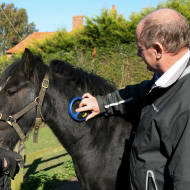
Image (C) World Horse Welfare.


 Defra has published guidance for the vet sector ahead of a proposed UK-EU Sanitary and Phytosanitary agreement.



