
Your data on MRCVSonline
The nature of the services provided by Vision Media means that we might obtain certain information about you.
Please read our Data Protection and Privacy Policy for details.

In addition, (with your consent) some parts of our website may store a 'cookie' in your browser for the purposes of
functionality or performance monitoring.
Click here to manage your settings.
If you would like to forward this story on to a friend, simply fill in the form below and click send.

Your friend's email:
Your email:
Your name:
 
 
Send Cancel

RSPCA reminds Government of Kept Animals Bill
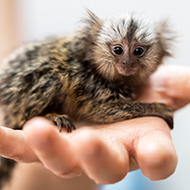
The Bill improves primate welfare by restricting the keeping of primates as pets.

Welfare Bill hasn't progressed since late 2021.

Animal welfare charity RSPCA has once again highlighted the Government's delay in passing the Kept Animals Bill, which has not progressed through the Parliamentary process since November 2021.

The Kept Animals Bill, which had its first reading in June 2021, includes a wide range of commitments to improve animal welfare, including restricting the keeping of primates as pets.

Among these include the banning the export of livestock for slaughter or fattening, limiting the non-commercial movement of dogs, cats and ferrets, tackling livestock worrying, and creating specific new offences linked to pet theft.

With the potential for a large positive impact on welfare on the line, the bill has yet to have its report stage and third reading in the House of Commons, as well as its journey through the House of Lords. The charity worries that the delay is preventing vital improvements for many animals in the UK.

One of the laws to potentially be brought into force is the power for UK and Welsh governments to place restrictions on the import of dogs from abroad, including those with cropped ears. 

Despite ear-cropping being an illegal procedure in the UK, the RSPCA is concerned that some traders crop their dogs' ears at home, using importation as a loophole and excuse. 

Head of public affairs at the RSPCA, David Bowles, commented on the Government's inaction with the Bill: “We're absolutely puzzled why the Kept Animals Bill remains in parliamentary limbo after so long - the UK Government really needs to get this done, for the sake of countless animals.


“From ending the keeping of primates as pets, to banning live export of animals for fattening and slaughter, and stopping cropped ear dogs being imported, this Bill needs to resume its parliamentary journey as soon as possible.”

Urging supporters to write to their MP and ask them to call on the Government to 'bring back the Bill before it's too late', the RSPCA is using the hashtag #ActNowForAnimals to garner support.

Become a member or log in to add this story to your CPD history

Equine Disease Surveillance report released for Q4 2025

News Story 1
 The latest Equine Disease Surveillance report has been released, with details on equine disease from Q4 of 2025.

The report, produced by Equine Infectious Disease Surveillance, includes advice on rule changes for equine influenza vaccination.

Statistics and maps detail recent outbreaks of equine herpes virus, equine influenza, equine strangles and equine grass sickness. A series of laboratory reports provides data on virology, bacteriology, parasitology and toxicosis.

This issue also features a case study of orthoflavivus-associated neurological disease in a horse in the UK. 

Click here for more...
News Shorts
NSA webinar explores sheep tailing and castration

The National Sheep Association (NSA) is to host a free webinar on the castration and tail docking of lambs.

The webinar, 'Understanding the tailing and castration consultation: A guide for sheep farmers', will be hosted online on Monday, 2 March 2026 at 7.30pm.

It comes during a government consultation into the methods used for these procedures. Farmers are encouraged to engage before the consultation period closes on Monday, 9 March 2026.

The webinar offers clear and actionable guidance to support farmers to contribute meaningfully to the consultation and prepare for potential changes.

On the panel will be former SVS president Kate Hovers, farmer and vet Ann Van Eetvelt and SRUC professor in Animal Health and Veterinary Sciences Cathy Dwyer. Each panel member will utilise their own specialism and expertise to evaluate risks and outcomes to sheep farming.

Find out more about the webinar on the NSA website.

