


Pennard Vets appoints new exotics lead
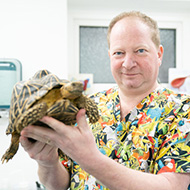
Veterinary surgeon Mark Rowland, who specialises in treating exotic animals, has been appointed by Pennard Vets.
Independent veterinary group Pennard Vets has appointed a new lead for its exotics department.
Mark Rowland, Advanced Practitioner in Zoological Medicine, qualified from Liverpool University in 1996, and has spent 25 years in practice.
Achieving the Royal College Certificate in Zoological Medicine in 2007, Mark is renowned in the industry for his exotics knowledge, and has lectured both in the UK and internationally on the subject.
Pennard Vets director Andy Green discussed Mark's credentials: “Mark is the most qualified vet in the South East of England working in exotics, and we are delighted he is bringing so much experience to Pennard Vets.
“We hope to become the go-to practice for all exotic pets in the South-East and believe that our new and existing clients will all benefit from Mark’s unique and thoughtful approach to veterinary care.”
Celebrating his new appointment, Mark said: “As well as treating dogs, cats and small pets like hamsters and guinea pigs, I’ve always been interested in caring for insects, fish, tortoises, birds, parrots, reptiles, and all other exotic pets.
“Exotic pets can suffer with all sorts of problems, including respiratory issues and hibernation complications, as well as accidents and injuries. Birds of prey for example can often hurt themselves needing urgent treatment, and each day brings new challenges. I have treated tortoises that had been attacked by dogs and a fish that had swallowed a huge pebble – no case is ever the same!
“I’m really pleased to be joining Pennard Vets, which has seven sites across Kent, and is owned by its employees, which made it a particularly attractive place to join, as I now also own a stake in the business and can help shape the future of it.
“I can’t wait to meet our clients and their pets and hope to make a real difference to their lives.”


 Defra has published guidance for the vet sector ahead of a proposed UK-EU Sanitary and Phytosanitary agreement.



