


Botulism “most likely” cause of Jersey cattle deaths
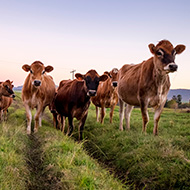
More than 100 cows died at Woodlands Farm, Jersey, in December.
The cause of a large number of cattle deaths on a Jersey farm was “most likely” botulism, a Government investigation has found.
Jersey's chief veterinary officer, Susana Ramos, said that testing on samples of cattle feed found no toxins. However, "there was the presence of bacterial spores”.
More than 100 cows died suddenly over the course of a few days in December 2022 at Woodlands Farm. As a precaution, the Government of Jersey collected and disposed of 33,000 litres of milk.
A subsequent investigation on samples of the cattle feed found no toxins present. However, toxin-producing bacteria were cultured from samples, and scientists believe this, coupled with the clinical signs, suggest botulism as the cause.
Ramos said: “Botulism is notoriously hard to test for, and diagnosis is often based primarily on the clinical signs and by ruling out other possible causes.
“Despite no toxin being found, there was the presence of bacterial spores, and we believe that these results, coupled with the exclusion of notifiable diseases, and the signs reported at the time at the farm, all combine to suggest botulism as the most likely cause of death.”
Botulism is characterised by progressive muscle weakness. Cattle are extremely sensitive to the toxin, and more often than not it is fatal.
Willie Peggie, director of natural environment, said there is no reason to believe there is any further risk to animals or to the general public.


 Defra has published guidance for the vet sector ahead of a proposed UK-EU Sanitary and Phytosanitary agreement.



