


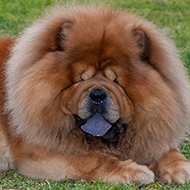
Some diseases are so common they are ‘almost normal for the breed’.
The scale of serious welfare issues linked to dogs with abnormal eyelid positioning has been revealed in a new study.
Researchers at the Royal Veterinary College (RVC) analysed a sample of 3,029 dogs diagnosed with conformational eyelid disorder cases in UK primary care practices during 2019.
Of these cases, 2,752 involved entropian, where the eyelids are tuned inwards, and 344 were ectropion, where the eyelids are turned outwards.
The findings show some dog breeds are diagnosed with much higher levels of eyelid disease each year than others.
Moreover, researchers say this may even be an underestimate, as it is likely many more dogs from predisposed breeds won’t have received a formal diagnosis. This is because the eyelids are perceived as ‘normal’ for the breed.
In a single year of study, conformational eyelid disorder was confirmed in the shar-pei (15.5%), chow chow (9/5%) and the Neapolitan mastiff (6.3%), among others.
Dr Dan O’Neill, associate professor of companion animal epidemiology at the RVC, and lead author of the paper, said: “This new paper highlights that even though some diseases are so common that they become almost ‘normal for breed’, this should never be interpreted as being ‘normal for a dog’.
“This paper shows the huge scale of suffering caused by conformational eyelid disorders in some dogs breeds and suggests it is finally time that everyone who cares about dogs stands up and shouts ‘no more’ to these forms of planned canine suffering due to our human desire to own unnatural and extreme body shapes in dogs.”
Researchers hope this findings will encourage people to avoid acquiring types of dogs with innately unhealthy eyelids and to effectively manage these disorders in dogs to minimise suffering.
Dr Minna Mustikka, clinical instructor, department of equine and small animal medicine at the University of Helsinki, and co-author of the paper, added: “As a dedicated specialist in veterinary ophthalmology, I witness firsthand the heart-wrenching consequences of conformational eyelid problems.
“In my daily practice, I meet dogs suffering from pain and distress from eye issues caused by improper eyelid positioning, often stemming from unhealthy appearance goals in dog breeding.
“This reality fills me with sadness, as such suffering is not only unnecessary but entirely preventable. While it takes considerable effort and numerous carefully weighed choices, it should be everyone’s duty to make this change happen”.
The study, Conformational eyelid disorders in dogs under primary veterinary care in the UK - Epidemiology and clinical management, is published in PLOS One.
Image © Shutterstock


 Defra has published guidance for the vet sector ahead of a proposed UK-EU Sanitary and Phytosanitary agreement.



