


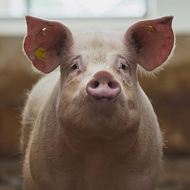
It is the first time the approach has shown to be effective.
New research led by The Pirbright Institute has demonstrated the effectiveness of a needle-free solid dose vaccine in protecting pigs against Porcine Reproductive and Respiratory Syndrome Virus (PRRSV).
It is the first time the approach has been shown to work in any species, and could reduce losses from the PRRSV, which are estimated to exceed some US$660 million in the US alone.
Dr Christine Tait-Burkard from the Roslin Institute described the development as ‘encouraging’, adding: “Controlling Porcine Reproductive and Respiratory Syndrome Virus would be a huge benefit for animal welfare, farmers and the food system.”
In the study, researchers tested a solid dose of modified live vaccine (MLV) using needle-free technology developed by aVaxiPen. The team injected the vaccine under the skin’s surface and combined it with a nasal-boost inactivated vaccine.
The nasal boost failed to enhance immunity in pigs. However, the solid-dose vaccine was shown to provide neutralising antibody responses and strong protection against infection. This was comparable to protection attained by conventional needle-and-syringe vaccination.
Furthermore, the study showed the solid dose PRRSV vaccine was less stable than expected, leading to evaluation at a lower dose than typically used. However, solid and liquid formulations provided a high level of protection.
Professor Simon Graham from The Pirbright Institute said: “This is the first time a solid dose vaccine has been shown to protect against infection in any species. It’s a step forward, not just for pig health, but for vaccine delivery technology more broadly – including for potential future use in humans.”
The study was a collaborative project between the Pirbright Institute, the Moredun Research Institute, Zoetis, Scotland’s Rural College and aVaxziPen. It builds on previous work by Pirbright and aVaxiPen on solid-dose PRRSV vaccines and complements studies on intranasal vaccine delivery using jet injectors by the Roslin Institute.
© Viktor Osipenko /Shutterstock.com


 Defra has published guidance for the vet sector ahead of a proposed UK-EU Sanitary and Phytosanitary agreement.



