


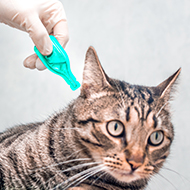
Research is the first to quantify the full health and economic impact of routine treatment.
Routine parasite prevention can protect pets from more than five million infections a year, according to new research.
The landmark study conducted by experts from Kreavet, the University of Nottingham, ESCAPP and ESCAPP UK & Ireland, also found that current protection methods could save UK households around £53 million in veterinary costs – and with optimal coverage, this increases to £95.2 million.
Writing in Parasites and Vectors, the authors describe how they used data on treatment usage, parasite prevention and associated costs to model infection outcomes across current and “optimal compliance” scenarios. In the optimal scenario, they found the number of prevented infections could rise by 70.6 per cent, reaching 9.3m annually.
The analysis assessed the impact of routine control measures against fleas, ticks, roundworms and lungworms in companion animals. It revealed that 2.3 million flea infestations and more than two million tick infestations are avoided each year in UK dogs and cats.
Flea prevention alone was found to save households around £32.2 million each year through avoided veterinary treatments and home decontamination costs.
Professor Hany Elsheikha, head of ESCCAP UK & Ireland, said: “This study provides the first national quantification of how many infections and infestations routine parasite control prevents in UK pets each year. Our modelling shows that preventive treatments make an important contribution to animal health, public health and household finances.
“By improving our understanding of the effects of parasite control on pet health, we can prevent more infections every year, reducing the risks for animals and families and the pressures on veterinary services.”
The research also notes that parasite infections are increasing, with expanding tick and lungworm populations. Inconsistent owner compliance remains a barrier to parasite control.
Professor Elsheikha added: “While our study highlights substantial health and economic benefits of preventive parasite control, it’s crucial that we continue to undertake research that helps the veterinary and pet communities understand how preventive care protects not only pets, but the people around them.
“At the same time, ongoing work is needed to better understand environmental pathways and to promote the sustainable, risk-based use of parasiticides.”
Image (C) Anastasiya Tsiasemnikava/Shutterstock.com


 Defra has published guidance for the vet sector ahead of a proposed UK-EU Sanitary and Phytosanitary agreement.



