


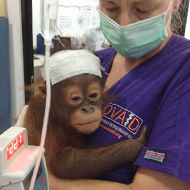
The species has been greatly impacted by flooding in Sumatra.
Years of orangutan veterinary support could be “wiped out overnight” due to the recent catastrophic floods in Sumatra, a UK-based charity has warned.
According to Orangutan Veterinary Aid (OVAID), the loss of equipment and transport means there is now only a brief window of time to prevent long-term impact on the conservation work for the species.
It warns that the critically-endangered apes cannot survive without expert veterinary care, and has launched a campaign to help replace lost and damaged equipment so local vets can continue their work.
OVAID co-founder Sara Fell Hicks, said: “We are devastated by what has happened to veterinary friends and conservation colleagues as a result of the disastrous floods and landslides. We must help them continue their vital work which contributes hugely to the conservation of orangutan in Borneo and Sumatra where every single orangutan life is precious”.
OVAID was formed in 2014 by Sara and her husband, Dr Nigel Hicks, who have over 17 years’ experience in working alongside Indonesian vets in orangutan rescue and rehabilitation. The charity supports veterinary teams by providing them with equipment and training to sustain orangutan numbers.
Specialist veterinary support is crucial for the species, not least because release back into the wild can take many years. Rehabilitating orangutans rescued from threats like poaching and habitat destruction also requires specialist care, with may suffering from physical wounds caused by machetes and gunshots, as well as severe mental trauma.
Sara added: “We formed OVAID in 2014 because we could see from working alongside the vet teams that it was an absolute necessity for strengthening orangutan welfare. Veterinary care is a key piece of the jigsaw in conservation efforts to sustain the orangutan populations which are under constant threat from so many directions – habitat destruction, poaching, the illegal wildlife trade and increasingly climate change. The vet teams tell us what they need and we provide it – a vet without equipment is like a mechanic without tools.
‘Equally important has been the training and support we have been able to provide for vets working on the ground. They often work in difficult situations and challenging conditions in the jungle and even more so now, after the floods have caused such devastation. There is always hope though – we wouldn’t do what we do without hope. We know the front-line vets truly appreciate our help and gain encouragement from knowing that people around the world care passionately about their work.”
For further information and to donate to the campaign, visit ovaid.org
Image (C) OVAID.


 Two independent vets have launched a podcast to help owners strengthen their bond with pets. Dr Maggie Roberts and Dr Vanessa Howie, who have worked in both veterinary practice and major charities, are keen to use their experience to enable people to give pets a better life.



